
Guides
The Benefits of Conducting a Pre-Purchase Building Inspection
A building inspection before purchase shows you the condition of the home you're buying, what needs repair and what to budget for, while you can still negotiate or walk away. This guide covers 6 benefits and when to book.
A building inspection before purchase gives you a clear, written picture of the home you're about to buy: its structure, its defects, the repairs it needs and what to budget for. You get that picture while you can still negotiate, plan or walk away, which is why it's 1 of the most useful steps in buying a home.
Buying a home is a big financial commitment, and it's easy to fall for the kitchen or the garden on the first visit. A thorough inspection keeps the decision grounded in facts. Vital's owner, Peter Ezeigwe, has a background in building restoration and disaster assessment, so Vital looks at a home the way someone who has repaired and restored buildings does: what's sound, what needs work, and what that work involves.
What a building inspection before purchase looks at
Vital inspects to AS 4349.1-2007, the Australian Standard for pre-purchase building inspections. Your inspector checks every accessible part of the property:
- The roof, including the roof covering, gutters, downpipes and the roof space.
- The subfloor, where access allows, for supports, ventilation and dampness.
- The exterior, from walls, windows and doors to decks, balconies and stairs.
- The interior, room by room, including wet areas, where a moisture meter tests for leaks.
- The site, including fences, retaining walls, paths, driveways, drainage and outbuildings.
Your inspector may also use a thermal imaging camera to show temperature differences that point to hidden moisture. The NSW Government's guide to pre-purchase inspection reports describes the report as a written account of the property's condition, with the inspector checking all accessible parts of the property.
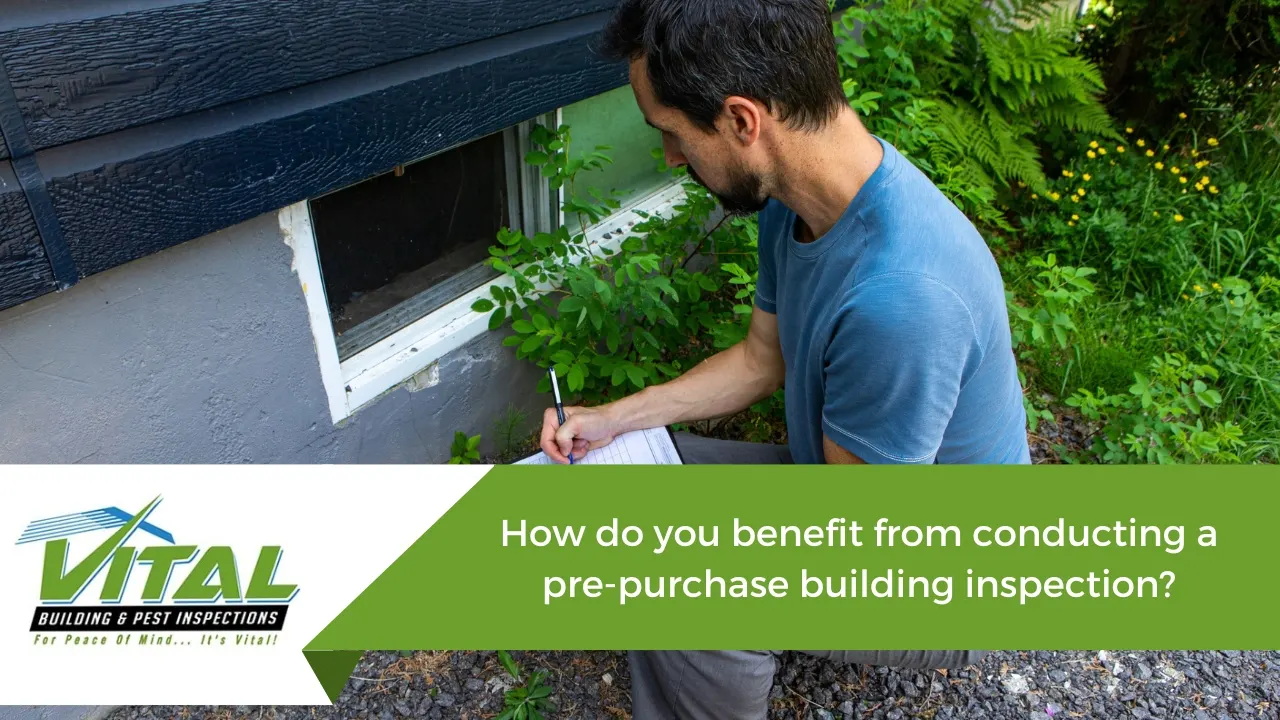
6 benefits of a pre-purchase building inspection
1. You understand the property you're buying
The main benefit is knowledge. The report tells you about the structure, the roof, the wet areas and the site, so the price you pay is for the home as it really is. It also helps first home buyers stay objective when a home looks perfect on inspection day.
2. You can judge the value of the property
Asking prices reflect demand and location as much as condition. When you add the repairs the report lists to the price, you see the full cost of the home. The report also tells you what the home is built from, which helps you plan long-term maintenance.
3. You learn what lies beyond the obvious
An open home shows you the rooms. An inspection takes you into the roof space, the subfloor and the areas behind the furniture, where defects such as leaks, timber decay and movement cracking show first. The report also lists any area your inspector couldn't access, so you know exactly what was inspected.
4. You know what work the home needs
The report separates major defects from minor ones and notes safety hazards, so you can plan repairs in the short, medium and long term. If the roof needs work soon, for example, you can ask the seller to repair it before settlement or negotiate a price that covers it.
5. You keep your options open
With the report in hand before exchange, you can proceed, renegotiate or step back. If you exchange first, the cooling-off period gives you a short window to act on the findings, and your conveyancer can tell you what a contract condition can offer.
6. You get an expert's advice on the home
You can ask your inspector how to look after the home, which repairs to prioritise and what a defect means in practice. Here's how 1 buyer described it, word for word:
Great service
Great service, very prompt and quick turnaround. I
Peter spent time to discuss the report and provide further feedback and answer my questions.
Thank you!
What it means for your property
A building inspection before purchase turns a big unknown into a clear list. You know which findings are major, which are routine maintenance, and which need a tradesperson's quote before you settle. You can take that list to your conveyancer, your lender and the seller.
For investors and renovators
If you're buying to renovate or resell, the inspection helps you set a realistic budget. Structural work, roof repairs and wet area waterproofing change the numbers on a project, so knowing about them before you buy protects your margin. The report also shows where improvements will add value, such as updating a tired bathroom on sound framing.
Termites and other timber pests
The NSW Government notes that a building report shows visible termite damage, but a pest inspection tells you whether termites are still active. Vital's pest inspections are carried out to AS 4349.3 with a Termatrac T3i, and a combined building and pest inspection covers both in 1 visit.
When to book an inspection
In NSW, a building inspection is usually carried out before you exchange contracts. When you buy a residential property, the NSW Government's page on contracts and deposits explains that you have a 5 business day cooling-off period after exchange, and that withdrawing in that period costs 0.25% of the purchase price. The cooling-off period doesn't apply at auction, so book your inspection before auction day.
To get the most from your inspection:
- Book as soon as you're serious about the home, and ask the agent for access.
- Attend if you can, so you can see the findings and ask questions on site.
- Read the report with your conveyancer before you exchange or before cooling-off ends.
- Get quotes for any major repairs, then use them to negotiate.
Vital's pre-purchase building and pest inspection page explains the service in detail, and the pricing page shows current prices. You'll find more buying guides on the guides page.
Book an inspection with Vital
Every inspection is carried out in-house by Vital's own experienced inspectors, with no subcontractors. You're encouraged to attend the inspection, meet your inspector and ask questions on site. Your inspector walks you through the findings and answers your questions about the report.
Frequently asked questions
When should I get a building inspection before purchase?
Book it before you exchange contracts, or early in the cooling-off period if you exchange first. The NSW Government notes that a building inspection is usually carried out before exchange, and that during cooling-off you should give the inspector as much notice as possible so you still have time to decide. For an auction, book it before auction day.
What does a pre-purchase building inspection cover?
Your inspector checks the accessible parts of the home to the Australian Standard for pre-purchase inspections: the roof covering and roof space, the subfloor, the exterior, the interior and the site, including fences, paths and outbuildings. The report records major and minor defects, safety hazards and any areas that couldn't be reached. The inspection page explains it in full.
Do I need a pest inspection as well as a building inspection?
The NSW Government advises getting a pest inspection as well, because a building report shows visible termite damage but doesn't say whether termites are still active. Vital's combined building and pest inspection covers both in 1 visit, with timber pest checks to the Australian Standard and a Termatrac for activity inside walls.
Can I attend the inspection?
Yes. You're welcome to attend, meet your inspector and ask questions on site, which is the best way to see the home through an inspector's eyes. Once your report is ready, your inspector walks you through the findings and answers your questions, so you know what each one means for your purchase.
Can I use the report to negotiate the price?
Yes. The report gives you a written record of defects and repairs, which you can take to the agent or seller to ask for a lower price or for repairs before settlement. Your solicitor or conveyancer can advise on how to put the request, and the guide to negotiating repairs covers it step by step.