
Inspection services
Timber floor inspections
A timber floor inspection checks your floorboards for movement, moisture, cupping and installation quality, and explains what's causing what you can see. Every timber floor inspection is carried out in-house by Vital's own experienced inspectors, with the findings set out in a written report.
A timber floor inspection gives you an independent view of a floor that has moved, lifted, gapped or changed colour, and of what's causing it. Every inspection is carried out in-house by Vital's own experienced inspectors, with no subcontractors, and your inspector checks the boards, the moisture in and below them and the signs of how they were laid. Vital inspects floors in homes and commercial properties across Sydney, and the written report sets out what was found and what Vital recommends next.
Timber floor inspections
Vital inspects most kinds of timber flooring:
- solid hardwood and tongue and groove floors
- overlay floors and floating timber floors
- pre-finished boards and recycled timber
- newly sanded and coated floors
- timber decking
Most people book a floor inspection for 1 of these reasons:
- you're buying a home and the floors show gaps, lifting or soft spots
- a new floor has started to move within months of being laid
- you've had a leak or flood and want to know what the water did to the floor
- you and your installer see the floor differently and need an independent record
If you're buying, the floors are also covered in a full pre-purchase building and pest inspection. A dedicated timber floor inspection suits you when the floor itself is the question.
Movement, moisture and cupping
Timber takes up and gives off moisture with the seasons. A timber floor expands in humid weather and shrinks in dry weather or under heating and cooling, so small gaps that open in winter and close in summer are part of living with a natural material.
Some conditions go beyond normal movement, and they're the ones your inspector looks for:
- Cupping: the edges of each board sit higher than its centre. It usually comes from moisture beneath the floor, though heat on a single area or a very dry room above can also cause it. Wide boards and overlay floors show it most, and a little cupping in a sunny spot can sit within normal limits.
- Peaking: it looks like cupping but comes from expansion pressure, with boards pushing hard against each other across the floor.
- Tenting: the joined edges of 2 boards lift above the floor around them, often linked to high moisture below.
- Buckling: a section of several boards rises above the floor next to it.
- Crowning: the centre of each board sits higher than its edges. It usually means a cupped floor was sanded flat before it dried out, and it can take some months to show after finishing.
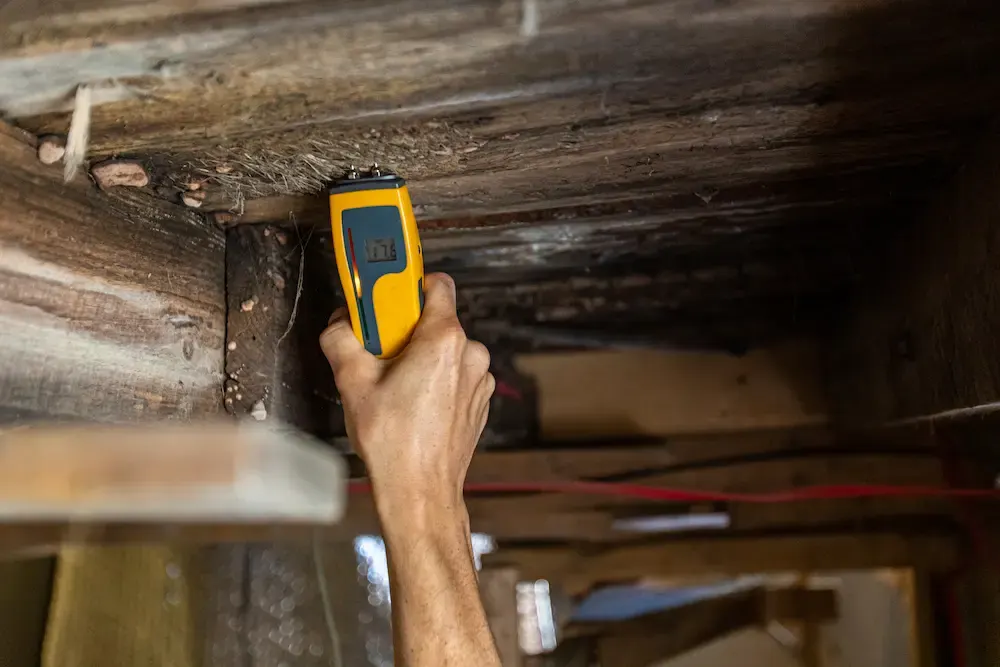
Because moisture sits behind most of these, your inspector takes moisture readings in the boards and, where the subfloor is accessible, in the bearers and joists below. Readings that run higher than the rest of the floor point the inspector toward the source, whether that's a leak, rising damp or a subfloor that needs more ventilation. A moisture meter takes these readings without lifting a board.
Water stains on skirting boards and swollen or darkened boards are signs of past water damage, and soft or hollow-sounding boards can point to rot or timber pests in the framing. If your inspector sees signs of termites, a termite inspection checks for activity.
Installation quality
For a new or recently laid floor, the way it was installed matters as much as the timber. Your inspector looks at:
- expansion gaps around the edges, under skirting boards and at doorways
- how the boards are fixed, and whether they were laid with room to move
- the subfloor or slab beneath, including its moisture, level and ventilation
- any underlay or moisture barrier, where it can be seen
- the sanded and coated finish
Your report states what your inspector found and what it points to, so you and your installer or builder can agree on the next step. If a floor is part of a wider list of building issues, a building defects report records them all in 1 place.
Great explanations about what he was looking for , he uses his knowledge of buildings, and gives his advice (tips) on things for buyers to look out for.
For day-to-day care once your floor is sorted, read the timber floor care and maintenance tips.
Prices and booking
Vital quotes each timber floor inspection for your floor and property, and the quote is free. Every inspection price is on the prices page, and you can see how findings are set out in the sample report.
You're welcome to attend, show your inspector what you've noticed and ask questions on site. Vital confirms when your report will be ready at the time you book. Your inspector walks you through the findings and answers your questions about the report.
Timber floor inspections are 1 of Vital's building inspection services. Answers to common booking questions are on the inspection questions page, and you can book an inspection online.
Frequently asked questions
Are gaps between timber floorboards normal?
Small gaps that open in dry weather and close again in humid weather are normal, because timber moves with the seasons. Gaps that keep growing, or boards that lift, cup or buckle, are worth having inspected.
What causes timber floorboards to cup?
Cupping usually comes from moisture beneath the floor, such as a leak, a damp subfloor or a slab that was still drying when the floor was laid. Heat focused on part of the floor, or a very dry room above it, can also cause it.
Can a timber floor inspection find termite damage?
Your inspector checks the floor for signs such as soft, hollow-sounding or damaged boards, and looks at the framing below wherever the subfloor is accessible. If there are signs of termites, a termite inspection checks for activity with a Termatrac.
Which kinds of timber floors does Vital inspect?
Solid hardwood, tongue and groove, overlay, floating and pre-finished floors, recycled timber, newly sanded and coated floors, and timber decking, in homes and commercial properties.
Can I use the report with my floor installer?
Yes. The report records what your inspector found, with photos and the likely cause, so you can raise it with your installer or builder. If the matter goes to a tribunal or court, ask about an expert witness report.
Book or ask Vital
Talk to Vital about your inspection
Send the address and the service you need, and Vital comes back to you with a free quote and a time. You're encouraged to attend, meet your inspector and hear the findings face to face.
0401 012 074Monday to Friday, 7am to 9pm