
Guides
How Regular Building Inspections Can Save You Money
A regular home maintenance inspection finds leaks, termite activity, damp and wear while they're small and simple to fix, so repairs stay affordable and your home keeps its value. A pre-purchase inspection does the same before you buy, giving you a basis to negotiate.
A regular home maintenance inspection saves you money by finding leaks, termite activity, damp and wear while they're small and simple to fix. A blocked gutter costs little to clear, and the rotted fascia and wet ceiling it leads to cost far more. An inspection gives you a prioritised list, so your maintenance budget goes where it does the most good.
The importance of regular building inspections
Homes change slowly. Gutters fill, sealant perishes, timber dries out, ground settles and termites move in from the yard, and most of it happens out of sight in the roof space, the subfloor and behind wall linings. A regular inspection looks at those areas on purpose and records what it finds, so changes are picked up while they're still minor.
That's the value of a regular check: you decide when and how repairs happen, instead of a leak or a termite discovery deciding for you.
What a home maintenance inspection covers
A maintenance inspection looks at the whole home and its site:
- the roof and gutters: cracked or slipped tiles, rusted sheeting, flashings, gutters and downpipes
- the roof space: framing, insulation, signs of leaks and vermin, where accessible
- the subfloor: piers, bearers and joists, ventilation, damp and timber decay
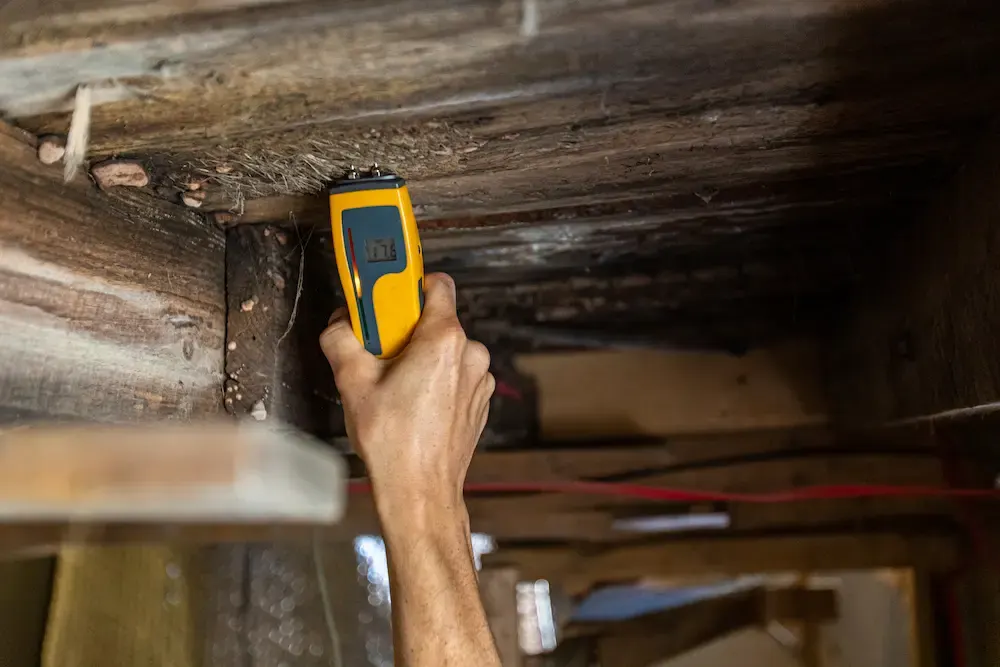
- wet areas: showers, baths, laundries and kitchens, tested with a moisture meter
- walls, windows and doors: cracking, sticking doors and windows, and seals
- decks, stairs and balustrades: decay, loose fixings and safety
- the site: drainage, paving that falls towards the house, retaining walls and fences
Your inspector may also use a thermal imaging camera to help look for signs of damp behind walls and ceilings, and Vital can add a timber pest inspection to AS 4349.3, using a Termatrac T3i to check for termite movement inside walls.
How regular building inspections save you money
Smaller repairs, caught early
Water is behind many of the most expensive repairs in a home, and most of it starts small: a cracked tile, a blocked gutter, a shower seal that's perished. The US Environmental Protection Agency's guide to mould and moisture notes that damp materials dried within 24 to 48 hours usually won't grow mould. Finding leaks early keeps the fix to a plumber or roofer, rather than a builder replacing timber and plaster.
Termite activity found while damage is limited
Termites eat timber from the inside. The Australian Museum's page on termites explains that subterranean termites become pests where they find a constant water source, which is why leaks and poor drainage attract them. An annual timber pest inspection finds activity while the damage is limited and treatment is straightforward.
A better negotiating position when you buy
A pre-purchase building and pest inspection shows you the repairs a home needs before you commit. Get quotes for the major items, such as termite damage, water damage, a rusted roof or cracked stumps, and you can ask for a lower price or for the seller to fix them before settlement. Your conveyancer can advise on how to put the request.
A safer home
Loose balustrades, uneven stairs, damaged glazing and visible electrical hazards are simple to fix once you know about them. Fixing them early keeps your family and visitors safe, and the report lists them separately so they're easy to find.
A home that keeps its value
A well-maintained home presents better and sells with more confidence. Keeping your inspection reports and repair records gives buyers a clear history of how the home has been looked after.
A clear record for investors
If you own a rental property, the ATO's guide to repair and maintenance expenses explains that repairs for wear and tear while the property is rented can be claimed, while initial repairs for defects that existed when you bought it are capital in nature. A dated inspection report records the condition at a point in time. Peter isn't a tax adviser, so ask your accountant how this applies to you.
Choosing a qualified building inspector
The value of an inspection depends on the inspector. Look for:
- building qualifications and experience: Vital's owner, Peter Ezeigwe, holds a Certificate IV in Building and Construction and a Diploma of Building and Construction, and he's a Housing Industry Association (HIA) member
- professional indemnity insurance: the NSW Government recommends checking that your inspector holds adequate cover
- the right tools: moisture meters, thermal cameras and termite detection equipment help the inspector look further behind surfaces
- clear reports: ask for a sample report, and look for photos and a recommendation for each finding
- reviews: past clients' comments on thoroughness and communication tell you a lot
The guide to choosing a building inspector covers this in more detail.
The process of a building inspection
- Booking: you send the address and what the inspection is for, and Vital confirms the scope.
- On site: your inspector works through the interior, roof space, subfloor, exterior and site. You're welcome to attend.
- The report: findings are grouped into major defects, minor defects and safety hazards, with photos, locations and recommendations. Vital's sample report shows the layout.
- The walk-through: Your inspector walks you through the findings and answers your questions about the report.
- The repairs: you fix the safety items and major defects first, and plan the rest over time.
Vital's owner, Peter Ezeigwe, has a background in building restoration and disaster assessment, and Vital's reports explain how each defect is repaired as well as where it is.
Invest in regular building inspections for long-term cost savings
A regular inspection usually costs much less than the repairs it heads off, and it gives you control over when and how maintenance happens. For most homes, a timber pest inspection every year and a building inspection every year or 2 keep everything on track. Every inspection is carried out in-house by Vital's own experienced inspectors, with no subcontractors. There are more guides on looking after your home on the guides page.
Frequently asked questions
What is a home maintenance inspection?
It's a building inspection of a home you already own, to record its condition and list the repairs and maintenance it needs. The report sorts findings by priority, with photos and a recommendation for each, so you can fix the important items first and plan the rest into your budget over time.
How often should I have my home inspected?
For timber pests, the Australian Standard for termite management, AS 3660.2, recommends an inspection at least once a year, and more often where termites are active nearby. For the building itself, every year or 2 suits most older homes, and after a major storm or before a renovation is a good time too.
How does a building inspection save money when buying?
The report shows you the repairs the home needs before you commit. You can get quotes for the major items and ask for a lower price or for the seller to fix them before settlement, and you can plan the rest into your budget. Your conveyancer can advise on how to put a request to the seller.
Can I claim a building inspection or repairs on a rental property?
The ATO explains that repairs for wear and tear or damage that happens while you're renting out a property can be claimed, while initial repairs for defects that existed when you bought it are capital in nature. Peter isn't a tax adviser, so ask your accountant how this applies to you.
What does a maintenance inspection look at?
The roof and gutters, the roof space, the subfloor, wet areas, walls, windows, decks and the site, including drainage and retaining walls. Where appropriate, your inspector may use a moisture meter and thermal camera to find hidden damp, and Vital can add a timber pest inspection for termites, borers and decay.