
Guides
Commercial Property Inspection Checklist: What Business Owners Need to Know
This commercial property inspection checklist covers the structure, roof and drainage, cladding, slab, wet areas, site, pests and older materials, with the fire safety, electrical and asbestos records to ask for, so business owners, buyers and tenants know what they're taking on.
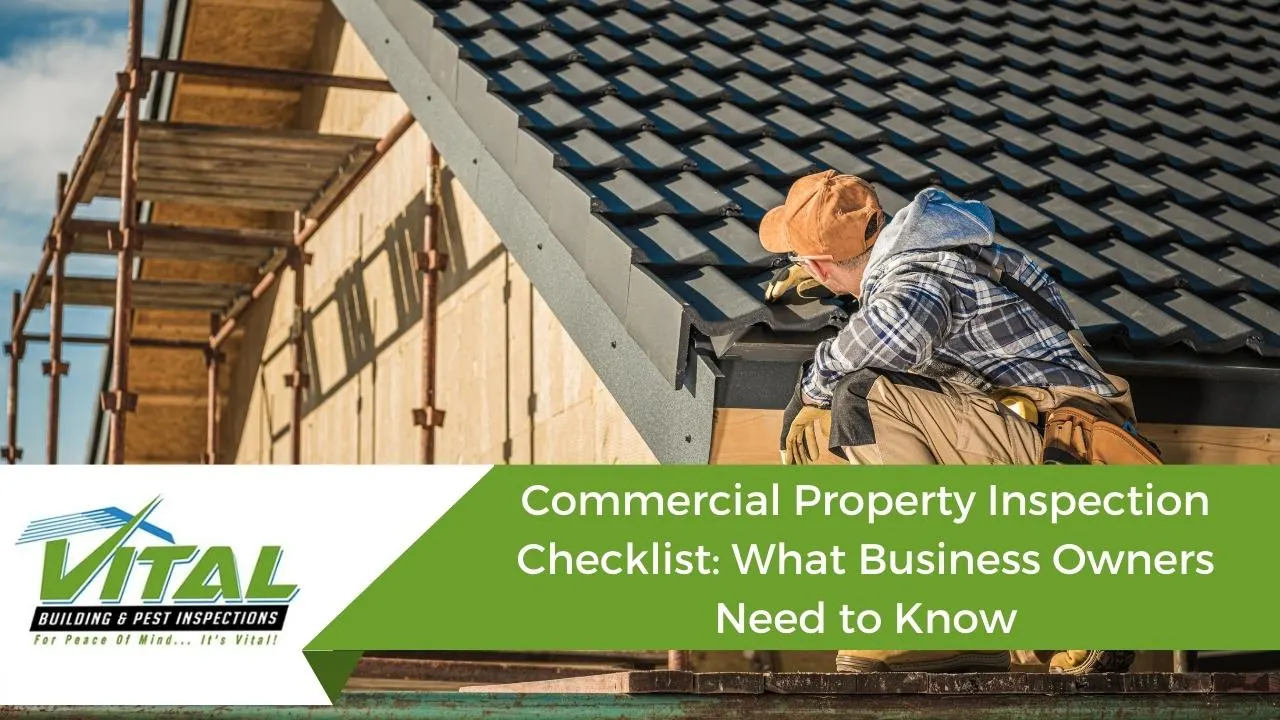
A commercial property inspection checklist helps business owners, buyers and tenants see the condition of a building before they commit, and keep it in good order once they're in. It covers the structure, the roof and its drainage, the cladding, slab, wet areas and site, along with the records to ask for, such as the annual fire safety statement and the asbestos register. This guide sets out the property inspection checklist Vital's inspectors work through on offices, shops, warehouses and factories, and how a commercial building inspection protects your investment.
Property inspection checklist at a glance
| Area | What to check |
|---|---|
| Structure | Cracks, movement, column and beam condition, floors and slabs |
| Roof | Roof sheeting, box gutters, skylights, flashings and downpipes |
| Walls and cladding | Cracking, corrosion, sealant joints, cladding fixings |
| Slab and floors | Cracks, joint condition, trip hazards, damp |
| Wet areas | Leaks, waterproofing, drainage, tiling |
| Doors and access | Roller doors, entry doors, stairs, ramps and balustrades |
| Site | Car parks, driveways, retaining walls, fences and stormwater |
| Pests | Termites, borers and timber decay, plus signs of other pests |
| Records | Annual fire safety statement, asbestos register, service records |
The importance of commercial property inspections
Commercial buildings have larger roofs, more complex drainage, shared areas and heavier use than a home, and their repair costs scale with them. A commercial property inspection puts the condition of the building in front of you before you commit, so you can negotiate, plan and budget with the facts.
It suits:
- Buyers and investors, who want the building's condition before they exchange, to negotiate on price or repairs and plan the first years of maintenance
- Tenants, who want a record of the building's condition before they sign or renew a lease, especially with a make-good clause
- Owners and managers, who want a clear list of maintenance items in order of priority, before a sale, a refinance or a new lease
- Agents, architects and developers, who want an independent assessment of an existing building before a sale campaign, a fit-out or a redevelopment
The commercial property inspection checklist
Structural integrity
Start with the bones of the building. Look for cracks in walls, columns and beams, signs of movement such as doors and roller doors that bind, and floors or slabs that have dropped or cracked. In older buildings, check for corrosion on exposed steel and concrete spalling, where concrete breaks away and exposes the reinforcement.
Roof and roof drainage
Commercial roofs are large and often low-pitched, so drainage matters. Check:
- roof sheeting for corrosion, loose fixings and lifted sheets
- box gutters, which sit inside the roof line, for blockages, corrosion and overflow capacity
- skylights for cracked sheeting and water marks below them
- flashings at walls, penetrations and plant
- downpipes, rainwater heads and overflows, so water leaves the roof quickly
Water marks on ceilings, walls and stock below the roof are the first sign of a drainage issue.
External walls and cladding
Check brickwork, blockwork, precast panels and metal cladding for cracking, corrosion and loose fixings. Look at sealant joints between panels and around windows, which harden and crack over time, and at control joints, which let the walls move.
Slab and floors
Look for cracks and lifting at slab joints, damaged edges where forklifts and trolleys run, trip hazards, and signs of damp at the base of walls. In a warehouse or factory, the slab takes the heaviest wear of the whole building.
Wet areas and plumbing
Check toilets, kitchens and showers for leaks, damaged waterproofing, slow drainage and water damage to the walls and floors next to them. A licensed plumber checks the hot water system, backflow devices and the plumbing itself.
Doors, access and safety
Check roller doors, entry doors and their hardware, stairs, ramps, handrails and balustrades. Confirm exits are marked, clear and easy to open. For questions about accessibility under the building rules, a building certifier or access consultant can advise.
Fire safety, electrical and plant
Fire safety systems, electrical installations, lifts and air conditioning plant are certified and serviced by licensed specialists. The NSW Government's page on fire safety certification explains that annual fire safety statements must be issued each year by or on behalf of the owner, confirming that an accredited practitioner (fire safety) has assessed, inspected and verified the performance of each fire safety measure. Ask the owner or agent for a copy, along with recent service records for the electrical switchboards, lifts and air conditioning.
Asbestos and older materials
SafeWork NSW's asbestos page explains that if a workplace was built before 31 December 2003, or asbestos has been identified there, you must keep a register showing when the asbestos was found, where it is, what type it is and what condition it's in, and make it available to anyone likely to be exposed. Ask to see the register before you buy, lease or fit out an older building. An asbestos inspection identifies materials that may contain asbestos, such as fibre cement roofing, wall sheeting and eaves.
Damp and mould
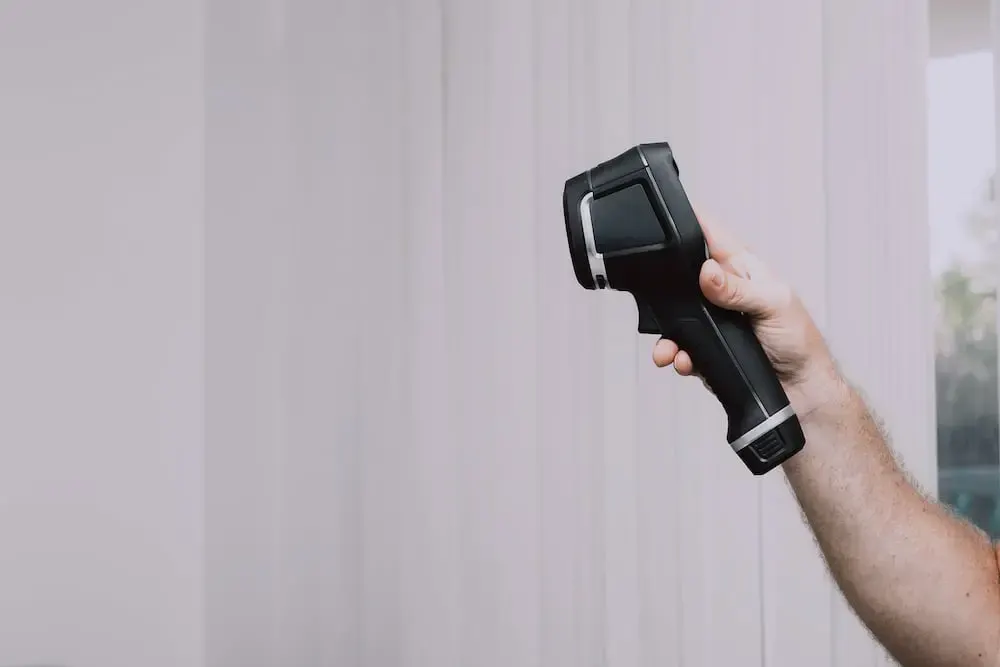
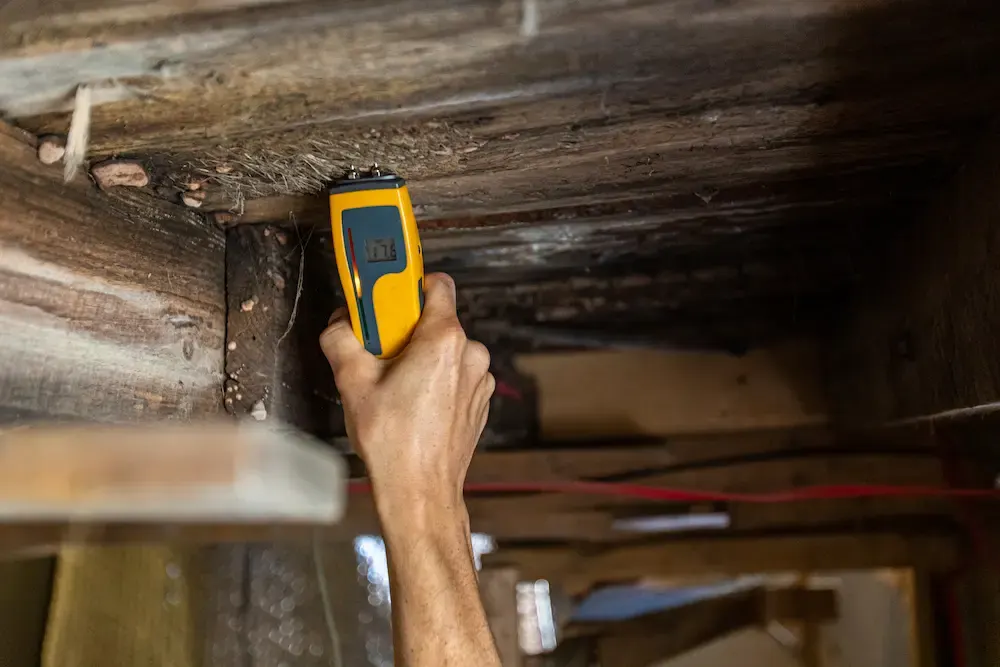
Check ceilings, walls and storerooms for water stains, musty smells and mould, especially near roof drainage, wet areas and air conditioning units. Where appropriate, your inspector may use a thermal imaging camera and a moisture meter to trace damp behind walls and ceilings without cutting into them.
Timber pests
Termites can reach any building with timber framing, timber floors, fit-out timber or landscaping close to the walls. A timber pest inspection to AS 4349.3 looks for termites, borers and timber decay, and the conditions that attract them. Peter's guide to the benefits of a commercial pest inspection explains when it's worth adding.
The site
Check car parks and driveways for cracking and drainage, retaining walls for leaning or bulging, fences and gates, and the stormwater system, so water drains away from the building. If building work is about to start next door, a dilapidation report records your building's condition first.
Security and services
Check that locks, roller door controls, gates and lighting work, and note the age of any security and access systems, so they can be serviced or upgraded with the rest of your maintenance plan.
How a commercial building inspection works
Vital agrees the scope with you before the inspection, based on the building and what you need the report for. Every inspection is carried out in-house by Vital's own experienced inspectors, with no subcontractors, and your inspector checks the roof, roof space, walls, slab, interior and site where they can be safely reached.
Your report sets out defects, safety hazards and maintenance items, with photos and where each one is, so you can act on it, share it with your agent or solicitor, or use it to plan works. Vital confirms when your report will be ready at the time you book. Your inspector walks you through the findings and answers your questions about the report. You can see the format in Vital's sample report.
Vital's owner, Peter Ezeigwe, holds a Certificate IV in Building and Construction and a Diploma of Building and Construction, and has a background in building restoration and disaster assessment.
Protect your commercial investment
A commercial building is a large investment, and a clear picture of its condition lets you buy, lease and maintain it with confidence. Work through this property inspection checklist on your own walk-through, ask for the fire safety and asbestos records, and book a professional inspection to cover the roof, structure and site in detail.
Vital's commercial building inspections cover offices, shops, warehouses and factories across Sydney, for buyers, tenants and owners. Vital gives you a free quote first, based on the size and type of building and the scope you need. Peter's guide on why industrial building inspections are crucial covers warehouses and factories in more detail.
Book an inspection, request a free quote, or call Vital on 0401 012 074. Peter's blog has more guides for business owners and property buyers.
Frequently asked questions
What should a commercial property inspection checklist include?
It should cover the structure, the roof and its drainage, box gutters and skylights, external walls and cladding, the slab and its joints, internal walls and ceilings, wet areas, doors and roller doors, car parks, driveways, retaining walls and site drainage. Add the records to ask for, such as the annual fire safety statement and, for older buildings, the asbestos register.
Who should get a commercial building inspection?
Buyers and investors before they purchase, tenants before they sign or renew a lease, and owners and managers planning maintenance, a refinance or a sale. A dated report at the start of a lease is especially useful for tenants with a make-good clause, because it shows the condition of the building they took on.
Does a commercial building inspection cover fire safety and electrics?
Fire safety systems, electrical installations, lifts and air conditioning plant are certified and serviced by licensed specialists. In NSW, the owner issues an annual fire safety statement each year, confirming an accredited practitioner has assessed each fire safety measure. Your inspector notes any visible sign that a specialist should take a closer look.
Does a commercial property need an asbestos register?
SafeWork NSW says that if a workplace was built before 31 December 2003, or asbestos has been identified there, you must keep a register showing where the asbestos is, its type and its condition, and make it available to anyone likely to be exposed. Ask to see it before you buy, lease or fit out an older building.
Can a pest inspection be added to a commercial inspection?
Yes. Vital can add a timber pest inspection for termites, borers and timber decay, which is worth doing for any building with timber framing, timber floors, fit-out timber or landscaping close to the walls. If your inspector notices signs of other pests, such as rodents, the report notes them so you can arrange pest control.