
Guides
Unveiling the Secrets of Sydney's Historic Homes: Common Issues Found in Older Properties
An old house in Australia, and in Sydney in particular, brings character along with features of its era worth checking: footings that move with the soil, older roofs, original wiring and pipes, asbestos and lead paint, timber pests, heritage controls and limited insulation. This guide covers each one and how to look after it.
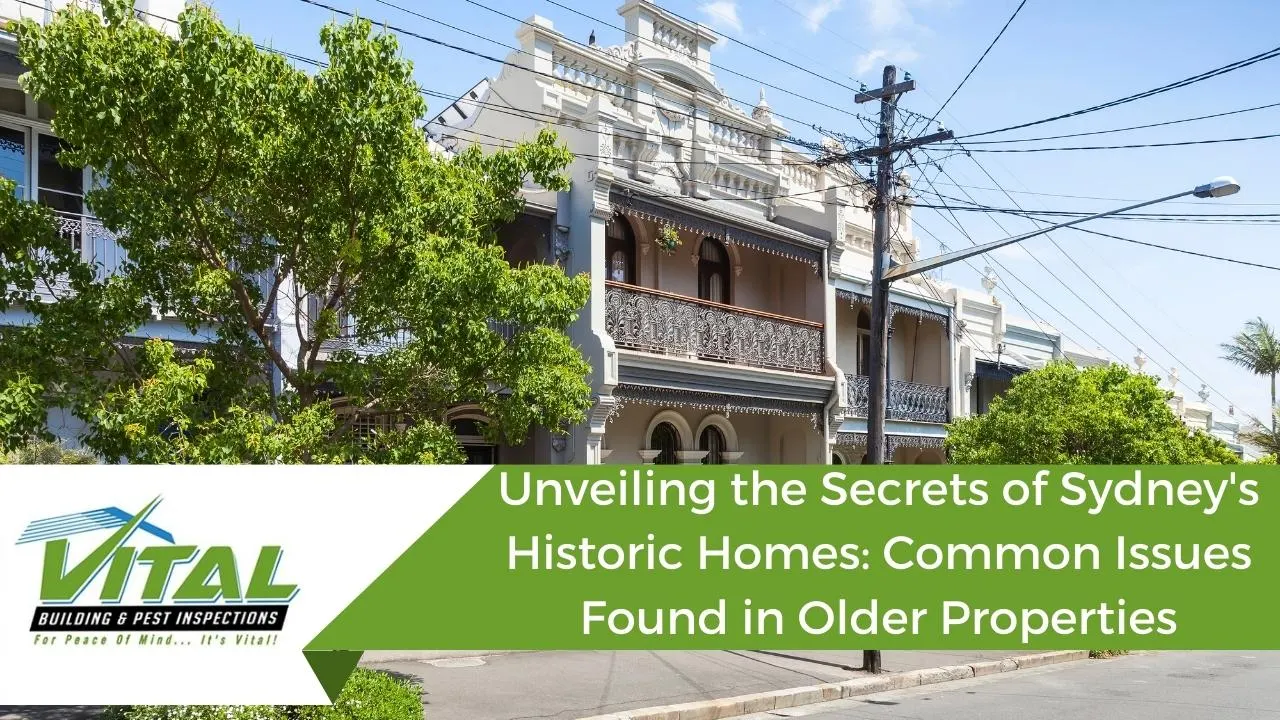
An old house in Australia, and in Sydney in particular, gives you character, solid materials and an established street, along with features of its era that are worth checking. Footings move with the soil, roofs and gutters age, original wiring and pipes reach the end of their life, and older materials can include asbestos and lead paint. A careful inspection shows where each one stands, so you can plan repairs and keep what makes the home special.
Vital's inspectors check homes of every age across Sydney, and Vital's owner, Peter Ezeigwe, has a background in building restoration and disaster assessment, so he knows how older homes were built and how they've been altered over the years. This guide covers the 7 areas to check and how to look after each one.
Foundation Frustrations: footings, floors and movement
Many Sydney suburbs sit on clay soils that swell when they're wet and shrink as they dry, so footings move a little with the seasons. Older homes often sit on brick piers or strip footings with timber floors above, and decades of that movement shows up as:
- cracks in brickwork and plaster, especially above doors and windows
- doors and windows that stick or swing open on their own
- floors that slope or bounce, and gaps opening at skirting boards
- damp or poorly ventilated subfloors, which can affect timber and footings
Drainage plays a big part. Downpipes that discharge beside the house, leaking pipes and garden beds against the walls all wet the soil around the footings. Fixing drainage and leaks is often the first step, and a structural engineer advises on significant movement, including whether restumping or underpinning is needed. Peter's guide to having cracks in your home explains how cracks are assessed.
Roofing Woes: tiles, flashings and gutters
Older roofs in Sydney are often terracotta or concrete tiles, slate or corrugated iron. With age, tiles crack or slip, the mortar bedding and pointing on ridge caps weathers, flashings lift, and gutters and valleys rust or fill with leaves.
In the roof space, an inspector looks for daylight, water stains on timbers and damp insulation, and inside the home for stains on ceilings. Where appropriate, your inspector may use a thermal imaging camera and a moisture meter to help look for signs of damp that hasn't yet shown on the surface.
Regular care keeps an older roof sound: cleaning gutters and valleys, replacing cracked tiles, re-bedding and re-pointing ridge caps, and having a roofer check flashings around chimneys and walls.
Electrical and Plumbing Predicaments: older wiring and pipes
Original wiring, switchboards and pipes in an older home may have been partly upgraded, fully upgraded or left as they were. The NSW Government's guide to building and pest inspection reports lists electrical wiring, plumbing and gasfitting as outside a standard building inspection, so a licensed electrician and plumber assess those systems.
Your inspector notes the visible signs, such as leaks, water stains, corroded pipes or an old switchboard, and recommends the right trade to follow up. For electrical safety, the NSW Government recommends having safety switches installed on all circuits by a licensed electrician, and testing them at least every 6 months.
Asbestos Alert: materials to have tested
SafeWork NSW explains what asbestos is and where to find it, noting that homes built before the late 1980s may contain it. The NSW Government's asbestos website says it was totally banned in Australia from 31 December 2003. Common places in an older home include fibro wall sheeting, eaves, wet area linings, vinyl floor backing, roof sheeting, fences and sheds.
SafeWork NSW advises treating suspect material as asbestos until a laboratory test shows otherwise, so leave it undisturbed and use licensed asbestos professionals for testing and removal. Vital's asbestos inspection is the first step: Visual identification of materials that may contain asbestos. Peter's guide to how to identify asbestos in older homes explains each step.
Lead paint in older homes
The City of Sydney's advice on lead in your property says homes built before 1970 may contain lead paint, and the older the home, the more likely it is. Paint in good condition may be safer to cover than remove, and the City of Sydney recommends getting advice or having it tested before you remove it.
Termites and Timber Troubles: protecting the timber
Older homes have plenty of timber: floors, frames, verandahs, stairs, fences and outbuildings. Termites, borers and wood decay are drawn to timber that's damp or in contact with the soil, so subfloor ventilation, drainage and leaking pipes all matter.
A timber pest inspection to AS 4349.3 checks the roof space, subfloor, inside and outside of the home and the garden. Where appropriate, your inspector may use a Termatrac T3i to help check for termite movement behind walls and inside timber without drilling, and an inspection every 12 months helps look for signs of activity early, when treatment is simpler and repairs are smaller.
Heritage regulations and preservation
Sydney councils list local heritage items and heritage conservation areas in their local environmental plans, and the most significant places in NSW are on the State Heritage Register. Under the standard heritage controls in council plans, demolishing or altering the outside of a heritage item, or of a building in a heritage conservation area, generally needs development consent, and some minor works and maintenance can be exempt.
When you're buying, the planning certificate attached to the contract shows whether the property is a heritage item or in a heritage conservation area, and your conveyancer can explain what that means. Before you plan changes, speak to your council's heritage adviser, and work with an architect or builder experienced in older homes.
A detailed inspection report helps here too, because it records the condition of original features such as brickwork, timber joinery, verandahs and roofs, so repairs can be planned to suit the home.
Insulation and energy efficiency
Many older homes were built with little or no insulation, and some have been upgraded over the years. The Australian Government's energy.gov.au explains that heating and cooling make up 20% to 50% of household energy use, so comfort upgrades in an older home pay off year round.
Common improvements include ceiling insulation, sealing draughts around doors, windows and unused fireplaces, and better window coverings. The federal YourHome guide to insulation explains that older halogen and incandescent downlights can't be covered with insulation, and recommends replacing them with IC-4 rated LEDs, which are designed to be covered. In the roof space, your inspector notes the visible insulation and any downlights it can't cover.
Windows deserve attention in a heritage home, where heritage controls can limit changes such as double glazing. Well-fitted window furnishings help: lined Roman blinds sit close to the glass to help hold warmth in during winter and keep heat out in summer, without changing the outside of the house.
Inspecting an old house in Australia before you buy
A pre-purchase building and pest inspection gives you the condition of an older home before you commit, covering the structure, roof, roof space, subfloor, wet areas, site and timber pests to AS 4349.1-2007 and AS 4349.3. With the report in hand, you can negotiate, plan repairs into your budget, or arrange an engineer, electrician or plumber for a closer look.
Peter holds a Certificate IV in Building and Construction and a Diploma of Building and Construction, and he's a Housing Industry Association (HIA) member. Every inspection is carried out in-house by Vital's own experienced inspectors, with no subcontractors, so the business that inspects the home also prepares your report.
You're encouraged to attend the inspection, meet your inspector and ask questions on site. Your inspector walks you through the findings and answers your questions about the report. You can send a booking request with the address, and there are more guides on buying and looking after a home on the guides page.
Frequently asked questions
What are the common issues in an old house in Australia?
The usual ones are movement in the footings and floors, worn roof tiles, flashings and gutters, original wiring and pipes, asbestos in homes built before the late 1980s, lead paint in homes built before 1970, timber pests in floors and frames, heritage controls on changes, and limited insulation. A building and pest inspection shows where each one stands.
Is it worth getting a building inspection on an older home?
Yes. An older home has had decades of weather, ground movement, renovations and repairs, and an inspection shows you the condition of the structure, roof, wet areas, subfloor and timber before you commit. You can then negotiate, plan repairs into your budget, or arrange specialist advice, such as an engineer or a licensed electrician.
Does a building inspection check the wiring and plumbing?
The NSW Government lists electrical wiring, plumbing and gasfitting as outside a standard building inspection, so those systems are assessed by a licensed electrician and plumber. Your inspector notes visible signs along the way, such as leaks, water stains or an old switchboard, and recommends the right trade to follow up, which is worth doing in any older home.
How do I know if a house is heritage listed?
Councils list local heritage items and heritage conservation areas in their local environmental plan, and the most significant places are on the State Heritage Register. When you're buying, the planning certificate attached to the contract shows the property's heritage status, and your conveyancer can explain it. Your council's heritage adviser can tell you what changes need approval.
Do older homes have lead paint?
They can. The City of Sydney says homes built before 1970 may contain lead paint, and the older the home, the more likely it is. Paint in good condition may be safer to cover than remove, and it's best to get advice or have it tested before you sand, scrape or strip it during a renovation.