
Guides
The Importance of Regular HVAC Inspections and Maintenance
A regular HVAC inspection and service keeps your heating, ventilation and air conditioning running efficiently, protects indoor air quality and helps the equipment last. This guide covers what a licensed technician checks, what you can do between services, and what your Vital inspector notes about your system during a building inspection.
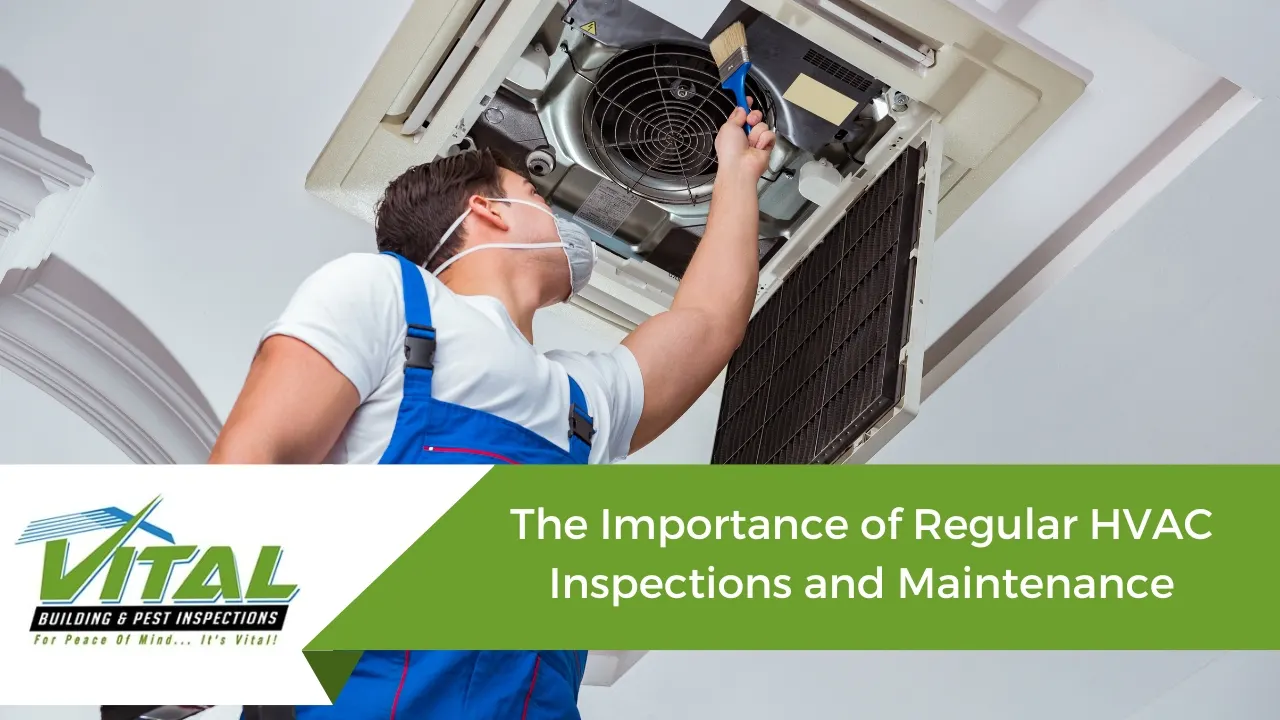
An HVAC inspection is a regular check of your heating, ventilation and air conditioning by a licensed technician, so the system runs efficiently, keeps the air in your home clean and lasts longer. Between services, a few simple habits keep it working well, and a building inspection adds a look at the parts of the system that affect the house itself: the roof space, the ceilings and the outdoor unit.
Why regular inspections matter
An HVAC system is a set of parts working together: fans, coils, filters, ducts, a refrigerant circuit, electrical controls and a drain that carries condensation away. Dust builds up, seals wear and drains clog over time, and each change makes the system work harder. A regular HVAC inspection finds these changes while they're small, so a clean or a minor repair keeps the system running smoothly.
What a licensed technician checks in an HVAC inspection
A typical service includes:
- cleaning or replacing filters, and cleaning the indoor coil and fan
- clearing the condensate drain so water flows away from the indoor unit
- checking the outdoor unit's coil, fan and airflow
- checking refrigerant levels and electrical connections
- testing that the system heats and cools to the settings you choose
The Australian Government's heating and cooling guide recommends booking a regular service by a licensed technician, and notes that installers must be licensed through the Australian Refrigeration Council.
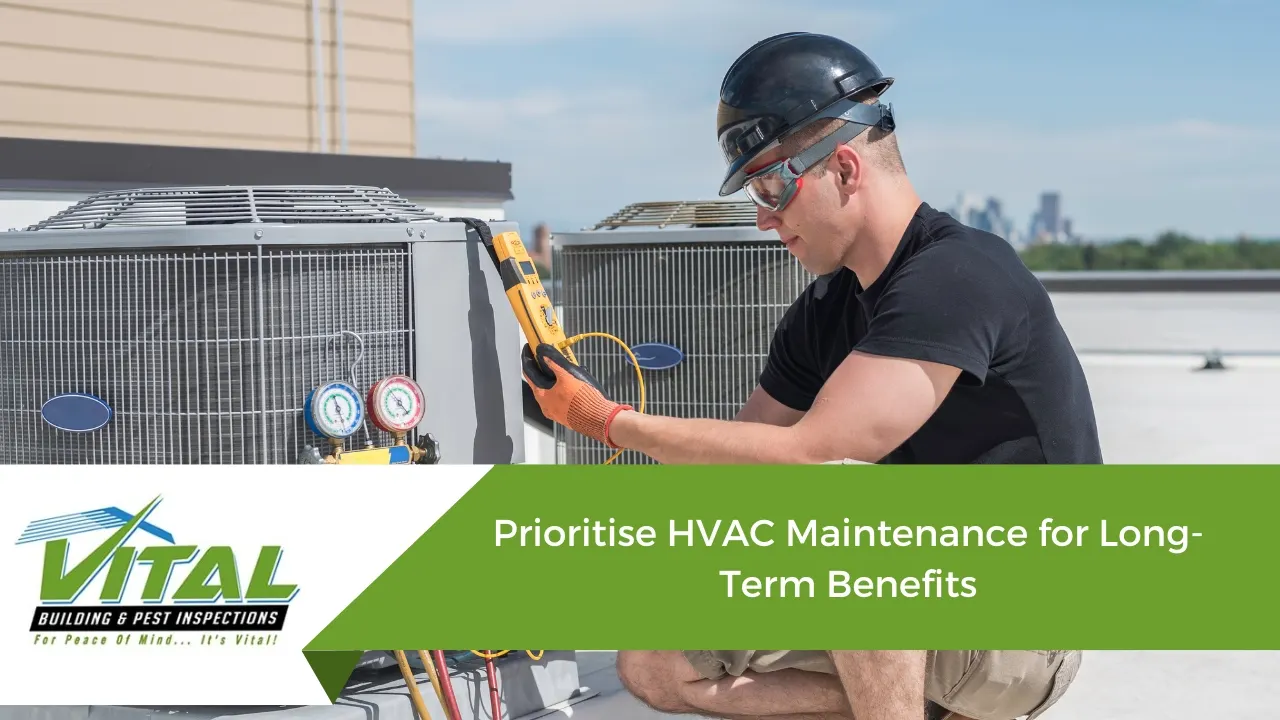
What your inspector notes about your HVAC system during a building inspection
Vital's building and maintenance inspections are visual: testing and servicing stay with your technician. Your inspector looks at how the system sits in the home, which is where it meets the building:
- Ducts in the roof space, for damage, disconnected sections, or ducts lying in contact with damp
- Ceilings and walls under indoor units, for water staining, damp or mould that point to a leaking unit or blocked condensate drain
- The outdoor unit, for a stable base, clear airflow and drainage away from the house
- Roof penetrations, such as flashings around a rooftop unit or duct outlet, for signs of leaks
- Condensate lines, for water discharging against the wall or onto a path
Where appropriate, your inspector may use a moisture meter and a thermal imaging camera to check for hidden damp around these spots. Where something needs a closer look, the report recommends a licensed air conditioning technician.
Enhanced energy efficiency
According to the Australian Government's energy website, heating and cooling can account for 20% to 50% of the energy used in Australian homes, depending on the climate zone. Each degree of extra heating in winter or cooling in summer increases energy use by 5% to 10%.
A well-maintained system reaches your chosen temperature with less effort, so it uses less energy. The home around it matters too: good insulation, air tightness and shading improve the efficiency of any heating or cooling system. A thermal camera helps your inspector see where ceiling insulation is missing or draughts are coming in, and those items go in your report.
Protecting indoor air quality
Filters, coils and ducts trap dust, pollen and debris, which is their job. When they're kept clean, the system circulates fresher air. When they're left, that build-up can reduce airflow and hold moisture.
Moisture is the bigger concern for the house itself. An indoor unit with a blocked drain can leak into the ceiling or wall below it, and condensation on uninsulated ducts can wet ceiling insulation. Those damp spots can grow mould. NSW Health's mould factsheet notes that mould needs moisture to grow, so a dry, well-drained system keeps mould away from your ceilings and vents.
Extending equipment lifespan
A heating and cooling system is a significant investment. Regular servicing keeps parts clean and correctly adjusted, so they wear more slowly, and a technician who sees a worn part early can replace it before it takes other parts with it. That keeps the system running for longer and makes its running costs more predictable.
Prioritise HVAC maintenance for long-term benefits
A simple routine keeps your system in good order:
- Clean the filters and wipe down vents and louvres between services, as the energy website suggests.
- Book a service by a licensed technician at the interval the manufacturer recommends, ideally before summer or winter.
- Keep the outdoor unit clear of plants, stored items and debris.
- Watch for drips, staining or a musty smell near indoor units, and act on them quickly.
- Include the system in your building maintenance checks, so ducts, ceilings and roof penetrations are looked at too.
Vital's maintenance reports cover the condition of the whole property, including the visible parts of the heating and cooling system. For commercial buildings, Vital's commercial and industrial inspections do the same at a larger scale. There's more on caring for your home on the guides page.
Every inspection is carried out in-house by Vital's own experienced inspectors, with no subcontractors. You're encouraged to attend the inspection, meet your inspector and ask questions on site. Your inspector walks you through the findings and answers your questions about the report.
Frequently asked questions
What is an HVAC inspection?
It's a check of your heating, ventilation and air conditioning by a licensed technician, who cleans and tests the indoor and outdoor units, checks the refrigerant and electrical connections, clears the condensate drain and makes sure the system heats and cools as it should. Most people book it as part of a regular service.
How often should my air conditioning be serviced?
Follow the manufacturer's instructions for your system. The Australian Government's energy website recommends booking a regular service by a licensed technician, and wiping down and cleaning the filters and the dust around the indoor and outdoor units in between services. Booking before summer or winter means the system is ready when you need it most.
Does a building inspection include the air conditioning?
A building inspection is visual and doesn't test or service the system. Your inspector notes what's visible, such as ducts in the roof space, water staining or damp under an indoor unit, the condition of the outdoor unit's base and any roof penetrations, and recommends a licensed technician where something needs a closer look.
Who can install or repair an air conditioner?
The Australian Government's energy website notes that air conditioner installers must be licensed through the Australian Refrigeration Council, and that servicing should be done by a licensed technician. You can check a technician's licence on the council's online licence check before you book the work.