
Guides
5 Types of Pests in Commercial Establishments
The pests in restaurants, shops, offices and warehouses most often include rodents, ants, ticks, fleas and termites. This guide explains how to spot each one, what attracts them, and how a clean, well-sealed site and regular inspections keep your business pest-free.
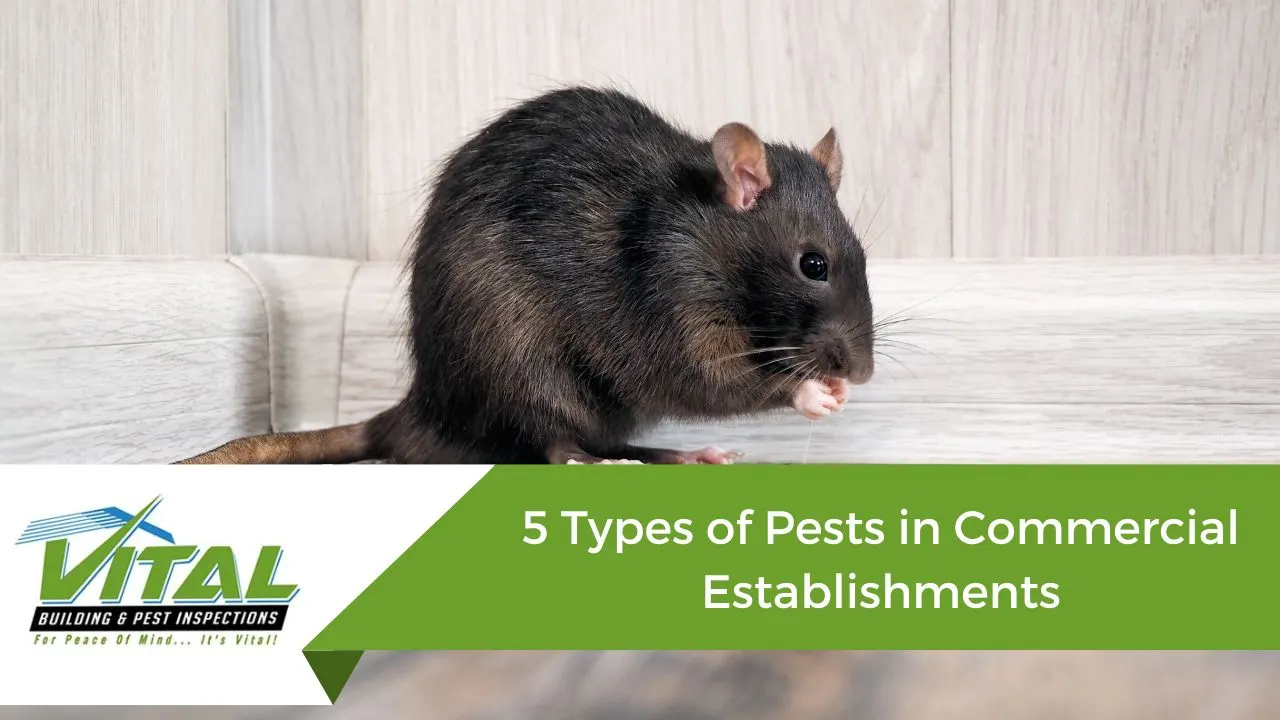
The pests in restaurants, cafes, shops, offices and warehouses are most often rodents, ants, ticks, fleas and termites. Each one is drawn by food, water, shelter or timber, so a clean, well-sealed site and regular inspections are the most reliable way to keep your business pest-free and your staff and customers comfortable.
Businesses will benefit from regular pest inspections
Pests are common across Sydney, in the suburbs and the city alike, and every business has something they want: food, water, warmth or timber. Some carry germs that cause illness, some damage stock and buildings, and a single sighting can change how customers see your business.
Regular inspections keep you ahead of them. A professional inspection finds early signs that are easy to miss in a busy workplace, explains what's attracting the pests, and gives your pest manager a clear starting point. Vital's commercial and industrial inspections can include a timber pest inspection to AS 4349.3, and your inspector notes any other pest activity seen along the way.
Common pests business owners should watch out for
These are 5 of the pests most likely to turn up in commercial premises, and the signs that tell you they're there.
1. Rodents
Rats and mice nest in ceilings, wall cavities, storerooms and the gaps behind equipment. HealthyWA's guide to keeping rats and mice under control notes that they can breed roughly every 20 days, and that they can spread diseases such as salmonellosis and leptospirosis through their urine, droppings and contaminated food and water.
They also chew. Rodents damage packaging, stock, insulation and electrical wiring, so finding them early protects your premises as well as your customers. Look for droppings, gnaw marks, greasy rub marks along walls, shredded nesting material and scratching sounds in the ceiling at night.
2. Ants
Most ants are a nuisance more than a danger, and they spread quickly once they find a food source. A trail across a kitchen bench or into a storeroom means the food they've reached has to be thrown out, and colonies can nest in wall cavities, under paving and in garden beds close to the building.
Some ants sting. Healthdirect's guide to insect bites and stings lists the Australian jack jumper ant among the insects whose stings most often cause severe allergic reactions, so ant nests near outdoor seating or staff areas are worth dealing with promptly.
3. Ticks
Ticks live on grass and bushes and move onto a passing host, so they can be carried in on people, guests' pets or animals from nearby bushland. Healthdirect's guide to tick bites explains that in eastern Australia most bites come from the paralysis tick, Ixodes holocyclus.
Most tick bites are harmless, and some cause allergic reactions, which can range from mild to anaphylaxis. Ticks can also pass on infections such as Queensland tick typhus and Flinders Island spotted fever. Businesses close to bushland, such as cafes, venues and accommodation, benefit from keeping lawns short and garden edges trimmed.
4. Fleas
Fleas usually arrive on pets and settle into carpets, rugs, soft furnishings and bedding. Health Victoria's guide to flea control explains that adult females lay 4 to 8 eggs at a time after a blood feed, and that the eggs hatch in 2 days to 2 weeks, so numbers can build quickly. It also notes that fleas can spread typhus.
Pet-friendly cafes, hotels and other accommodation are the most likely to see them. Regular vacuuming and washing of soft furnishings keeps fleas under control, and a licensed pest manager can treat a building where they've become established.
5. Termites
Termites eat timber from the inside, so a wall frame, floor, mezzanine or timber fit-out can look sound while it's being damaged. The Australian Museum's page on termites explains that subterranean termites draw water from the soil and become pests where they find a constant water source, which is why leaking pipes, blocked gutters and poor drainage around a building attract them.
Signs include mud tubes on walls and slab edges, timber that sounds hollow, bubbling paint and swarms of winged termites in spring or autumn. Where appropriate, your inspector may use a Termatrac T3i to check for termite movement inside walls without drilling, and a moisture meter to look for the damp timber termites prefer.
Pests in restaurants and food businesses
Restaurants, cafes and takeaways need particular care, because kitchens give pests food, water and warmth around the clock. Rodents and cockroaches are the pests most closely tied to food businesses, with ants and flies drawn to food and waste.
In NSW, the Food Authority explains that council environmental health officers carry out regular inspections of retail food businesses, and pest control is 1 of the items they assess, along with cleaning, temperature control and the design of the premises. A documented pest control program with a licensed pest manager, regular cleaning schedules and records of each service help you show your kitchen is well looked after.
The NSW EPA explains how to engage a pest management technician, including how to check their licence on its public register.
How to prevent a pest infestation in your business establishment
Staying ahead of pests is simpler and cheaper than dealing with an established infestation. These steps remove what attracts them.
Keep your establishment clean and tidy
Clutter gives pests places to hide, and food scraps give them a reason to stay. Keep storerooms organised with stock off the floor, wipe down benches and tables after each service, store food in sealed containers and empty bins daily into lidded waste containers away from the building. A tidy space also makes early signs, such as droppings or ant trails, easy to spot.
Seal possible entry points
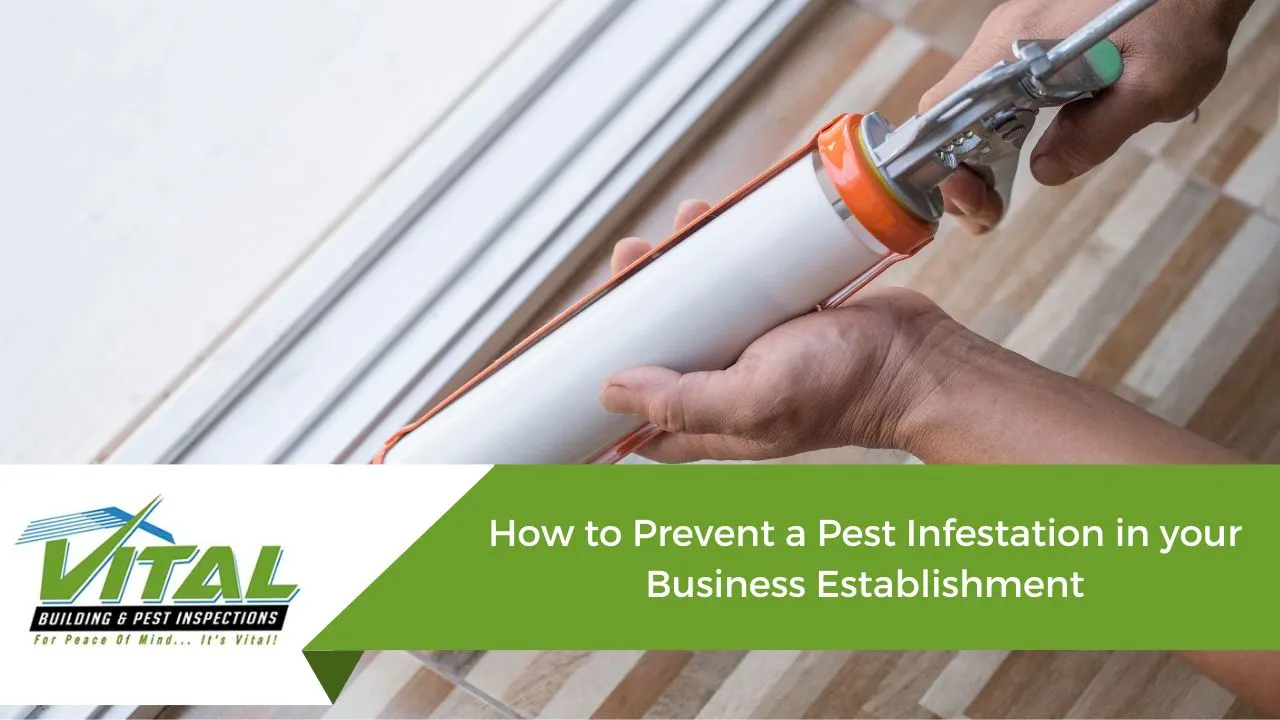
Pests come in through gaps around pipes, cables and vents, under doors, through damaged insect screens and through cracks in walls and ceilings. Sealing these gaps, fitting door seals and keeping screens in good repair closes the easy routes in. Keep garden beds, mulch and stored timber clear of external walls, so termite activity at the base of the building stays visible.
Wash linens, drapes and carpets regularly
Fleas and ticks shelter in soft furnishings. Regular vacuuming, steam cleaning carpets and washing drapes, cushion covers and linen keeps them under control, and it also reduces dust and mould build-up that can affect staff and customers with allergies.
Schedule a regular pest inspection service
A regular pest inspection finds activity while it's just starting and still simple to treat. For commercial premises, Vital's inspection covers termites, borers and timber decay, with a thermal imaging camera to help locate damp and warmth behind surfaces, and the report lists the conditions to fix as well as what was found.
Book a commercial pest inspection
Vital's owner, Peter Ezeigwe, has a background in building restoration and disaster assessment, and each Vital report explains how to repair damage as well as where it is. Every inspection is carried out in-house by Vital's own experienced inspectors, with no subcontractors. You're welcome to attend. Your inspector walks you through the findings and answers your questions about the report. The guide to the benefits of a commercial pest inspection explains what the inspection gives you, and there are more guides on the guides page.
Frequently asked questions
What are the most common pests in restaurants?
Rodents and cockroaches are the pests most often found in restaurants and other food businesses, because kitchens give them food, water and warmth. Ants and flies are drawn to food and waste too. Regular cleaning, sealed entry points, good waste storage and a pest control program with a licensed pest manager keep them out.
Do council food inspections check for pests?
Yes. The NSW Food Authority explains that council environmental health officers carry out regular inspections of retail food businesses, and pest control is 1 of the items they assess, along with food handling, cleaning, temperature control and the design of the premises. Keeping records of your pest control visits helps show your program is in place.
Does a commercial pest inspection cover rodents and cockroaches?
Vital's commercial pest inspection is a timber pest inspection to the Australian Standard, covering termites, borers and timber decay. Your inspector notes any signs of rodents or cockroaches seen on site, such as droppings, gnaw marks or nesting material, so your licensed pest manager knows where to start. Treatment is carried out by the pest manager.
How often should a business have a pest inspection?
The Australian Standard for termite management, AS 3660.2, recommends a timber pest inspection at least once a year, and more often where termites are active nearby. Food businesses usually have general pest control visits more often than that, under a contract with their pest manager, so activity is picked up early.
How do ticks and fleas get into a business?
Healthdirect explains that adult ticks live on grass and bushes and move onto a passing host, so they can arrive on people or animals that have been in bushland. Fleas usually arrive on pets. Regular vacuuming, washing soft furnishings and keeping lawns and garden edges trimmed keep both under control.