
Guides
Building and Pest Inspections: When to Schedule Them and How Often to Get Them Done
Here's when to get a building and pest inspection: before you exchange on a purchase, before you sell, after storms or before renovations, and a timber pest inspection at least once a year while you own the home, as AS 3660.2 recommends.
Here's when to get a building and pest inspection: before you exchange contracts on a purchase, before you sell, after a big storm or before a renovation, and a timber pest inspection at least once a year while you own the home. The Australian Standard for termite management, AS 3660.2, recommends that yearly pest inspection. Building inspections on a home you own are booked by need, whenever something changes. This guide covers when to schedule each inspection, how often to get them done, and what to expect on the day.
When to get a building and pest inspection at a glance
| Situation | Inspection | When to book |
|---|---|---|
| Buying a home | Combined building and pest inspection | Before you exchange contracts |
| Owning a home | Timber pest inspection | At least once a year |
| Selling a home | Pre-listing inspection | Before the home goes on the market |
| Renovating or extending | Building inspection, and asbestos inspection for older homes | Before work starts |
| After a storm or leak | Building inspection or maintenance report | As soon as you notice damage |
| New home | Construction stage and pre-handover inspections | At each stage and before handover |
| Building work next door | Dilapidation report | Before the work starts |
Introduction to building and pest inspections
A building inspection and a pest inspection look at 2 different things, and together they give you the full picture of a property.
- A building inspection to AS 4349.1-2007 looks at the condition of the building: the structure, roof, walls, floors, ceilings, wet areas and site, sorting findings into major defects, minor defects and safety hazards.
- A pest inspection to AS 4349.3 looks for timber pests: subterranean termites, wood borers and timber decay, along with the conditions that attract them.
The NSW Government's guide to inspection reports notes that a building inspection report doesn't cover pests, so a pest inspection is a separate report. Booking them together as a combined building and pest inspection covers both in 1 visit.
Importance of regular building and pest inspections
Homes change over time. Weather, ground movement, leaks and timber pests all work slowly, and much of it happens in places you rarely look, such as the roof space and the subfloor. Regular inspections find these changes while they're small and simple to deal with.
- Termites are found early. Termites can work inside walls and floors for a long time before damage shows, and a yearly inspection finds activity while it's small.
- Moisture is traced to its source. Leaks, damp and poor drainage feed mould, timber decay and termites, and an inspection finds where the water is coming from.
- Repairs are planned. A clear, prioritised list lets you budget for repairs rather than reacting to them.
- You have a dated record. Reports over the years show how the home has been looked after, which is useful when you sell.
When to schedule a building and pest inspection
Before you buy
Book a combined building and pest inspection as soon as you're serious about a property. The NSW Government notes that inspections are usually done before you exchange contracts, and that most inspectors need at least 2 to 3 days' notice. On a private sale, the cooling-off period ends at 5pm on the 5th business day after exchange, and there's no cooling-off period at auction, so for an auction, have the report before auction day.
The agent must tell you about any previous inspection reports that have been commissioned. A seller's report can be a useful starting point, and the NSW Government notes it isn't a substitute for your own independent report.
Before you sell
A pre-listing inspection shows you the home's condition before buyers see it. You can fix items before you list, or set your price knowing what buyers' inspectors are likely to find.
While you own the home
- Every year, book a timber pest inspection, as AS 3660.2 recommends.
- After a big storm or a leak, check the roof, ceilings and walls for water damage.
- When you notice cracks, sticking doors, damp or musty smells, book an inspection to find the cause.
- Before you renovate or extend, check the structure and, for a home built or renovated before 1990, book an asbestos inspection.
- Before building work starts next door, book a dilapidation report to record your home's condition.
When you're building
Construction stage inspections check the slab, frame, lock-up and fixing stages while the work is visible, and a new home inspection checks the finished home before handover. In NSW, the statutory warranty period is 6 years for major defects and 2 years for other defects, for contracts signed on or after 1 February 2012, so an inspection before each period ends gives you a clear list to raise with your builder.
How often to get building and pest inspections done
Pest inspections
AS 3660.2, the Australian Standard for termite management in existing buildings, recommends a timber pest inspection at least once a year. Some homes are worth checking more closely, such as homes with timber close to the ground, a damp subfloor, established gardens and trees near the house, or a history of termite activity. Book sooner if you notice mud tubes, discarded wings, hollow-sounding timber or rippled paint. Peter's guide to annual pest control and inspections explains the yearly routine.
Building inspections
A building inspection on a home you own is booked by need rather than on a fixed timetable. A maintenance report is a good fit for owners, because it gives you a prioritised list of what needs attention now and what can be planned for later. Many owners book one after a storm, before a renovation, before selling, or when a home has been rented out for a while.
Rental properties
For landlords, a rental inspection records the property's condition before a lease starts, and a yearly timber pest inspection keeps the building protected between tenants.
What to expect during a building and pest inspection
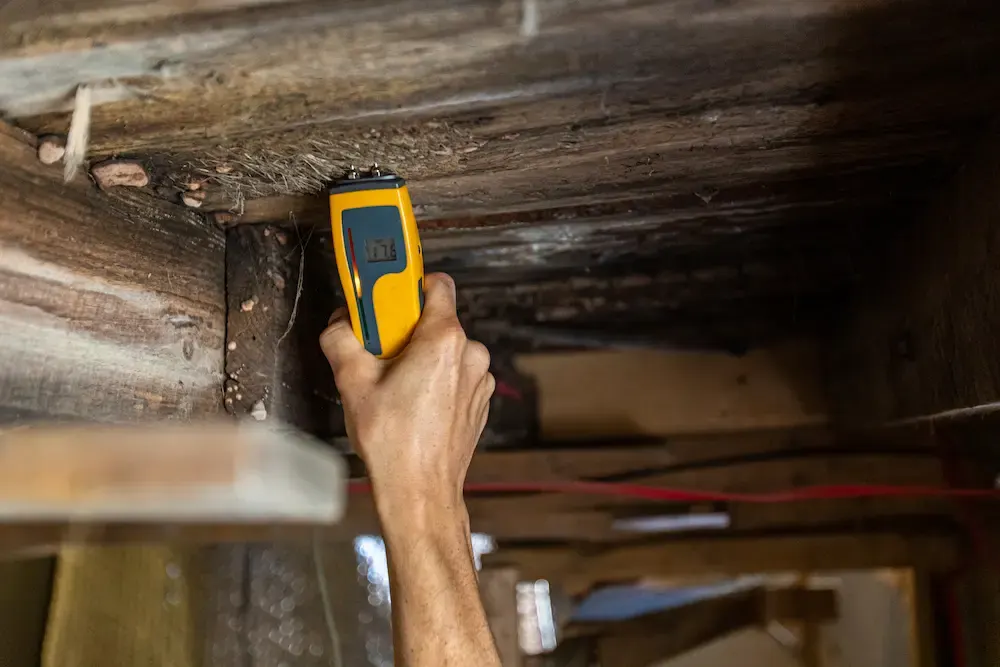
The inspection covers the interior, the roof space, the subfloor and the outside of the home, including the garden, fences, retaining walls and outbuildings, where they can be safely reached. Where appropriate, your inspector may use a Termatrac T3i to check for termite movement behind walls, a thermal imaging camera to show temperature differences that can point to leaks, damp or termite nests, and a moisture meter to read the moisture, all without cutting into the home.
To help the inspection go smoothly:
- clear access to the roof space manhole and the subfloor entry
- move stored items away from the walls, especially in the garage
- pull mulch and garden beds back from the outside walls, so the slab edge and weep holes can be seen
- point out anything you've noticed, such as cracks, leaks or mud tubes
You're welcome to attend and see any findings on site. The report has photos and recommendations for each finding, Vital confirms when it will be ready at the time you book. Your inspector walks you through the findings and answers your questions about the report. You can see the format in Vital's sample report.
Benefits of getting a building and pest inspection done
- You buy with confidence. You know the condition of the home before you commit, and you can negotiate on any major defects or termite damage.
- You sell with confidence. A pre-listing report lets you deal with items up front.
- You protect your home. Yearly pest inspections find termite activity early, while it's small and simple to treat.
- You plan your spending. A prioritised list of repairs helps you budget.
- You have an independent view. Vital inspects and reports only, so the findings are fully independent.
What an inspection catches early
An inspection is a small step that brings a lot of certainty. Termite activity found during a yearly check can be treated while it's in 1 area, rather than after it has spread through the frame. A leak found behind a shower can be fixed before it reaches the timber floor or the wall frame. And on a purchase, a report before exchange means the price you agree reflects the condition of the home.
If termites are found, leave them undisturbed, so a licensed pest manager can treat them. For building defects, Peter's guide on what to do after your building inspection explains the next steps.
Choosing a reliable building and pest inspector
The NSW Government recommends using a suitably qualified inspector with adequate insurance, particularly professional indemnity insurance. When you compare inspectors, ask:
- which Australian Standards they inspect to
- what qualifications and building experience they have
- whether they carry professional indemnity insurance
- what equipment they use for termites and moisture
- how soon the report arrives
- whether you can attend, and whether they'll walk you through the findings
Vital's owner, Peter Ezeigwe, holds a Certificate IV in Building and Construction and a Diploma of Building and Construction, is a Housing Industry Association (HIA) member, and has a background in building restoration and disaster assessment. Peter's guide on finding the right building inspector has more questions to ask.
Book your building and pest inspection
Vital carries out every pest inspection and building inspection in-house across Sydney. Book an inspection, see the prices, or call Vital on 0401 012 074. Peter's blog has more guides for buyers, sellers and homeowners.
Frequently asked questions
When should I get a building and pest inspection when buying?
Book it as soon as you're serious about a property, and before you exchange contracts if you can. The NSW Government notes that inspections are usually done before exchange and that most inspectors need 2 to 3 days' notice. At auction there's no cooling-off period, so have the report in hand before auction day.
How often should I get a pest inspection?
The Australian Standard for termite management in existing buildings, AS 3660.2, recommends a timber pest inspection at least once a year. Book one sooner if you notice mud tubes, discarded wings, hollow-sounding timber or rippled paint, and after a termite treatment, to confirm the activity has stopped.
How often should I get a building inspection on my own home?
A building inspection on a home you own is booked by need rather than on a fixed timetable. Good times are before a renovation, after a big storm, when cracks, leaks or damp appear, before selling, and before your builder's statutory warranty periods end on a newer home. A maintenance report gives you a prioritised list of repairs.
Should I get a building and pest inspection before selling?
A pre-listing inspection shows you the home's condition before buyers do, so you can fix items up front or price the home with confidence. Buyers in NSW still usually book their own independent inspection, because the NSW Government notes a seller's report isn't a substitute for their own.
Can I get a building and pest inspection after exchange?
On a private sale in NSW, you can use the cooling-off period, which ends at 5pm on the 5th business day after exchange, though it's best to have the report before you exchange. Ask your conveyancer about your contract, and book the inspection straight away so the report arrives in time to act on.