
Guides
All you need to know about pre-purchase inspections: a Q&A guide for savvy real estate investors
A building inspection for a house purchase checks the property's condition before you commit, and this Q&A covers what the inspection includes, what the report tells you and where to get one.
A building inspection for house purchase is a visual check of a property’s condition before you commit to buying it, so you know about major defects, safety hazards and maintenance items while you can still negotiate or reconsider. In NSW, it’s carried out to Australian Standard AS 4349.1-2007, and you get a written report that explains each finding.
Buyers should take advantage of pre-purchase inspections.
Pre-purchase inspections are necessary when it comes to buying properties, especially for savvy real estate investors. Unlike a car, buyers can’t “test drive” a home before buying. Unless the property is examined by building inspectors, buyers won’t be able to know the true condition of the property.
Indeed, building inspectors play a big role when it comes to helping buyers make informed decisions about the residential property they’re intending to buy. A proper home inspection gives potential owners that knowledge before they buy, so major defects come to light while there’s still time to price them in or have them repaired.
Here, Peter takes a look at some of the common questions related to pre-purchase inspection for savvy real estate investors and home buyers.
Building inspection for house purchase at a glance
- A building inspection for house purchase shows you the condition of the property before you commit.
- Its objective is to identify and locate minor and major defects, safety hazards and maintenance items.
- A qualified building inspector carries out a visual inspection to AS 4349.1-2007, and a pest inspection to AS 4349.3 can be added.
- The written report explains each finding, with photos, so you can negotiate, ask for repairs or reconsider.
- New homes benefit from an inspection too, because it checks the work against Australian building standards.
- Vital's owner, Peter Ezeigwe, holds a Certificate IV in Building and Construction and a Diploma of Building and Construction, and buyers are welcome to attend.
Q: What is pre-purchase inspection?
Answer: A pre-purchase inspection allows interested buyers to know the condition of the property that they’re intending to buy. This type of inspection involves a visual examination of the structure and is conducted by qualified and trained inspectors.
Inspectors play a big role whether the buyer will proceed with the transaction or not. Through the inspection report, buyers will know if there are any major issues or defects on the property. Some inspectors also conduct pest and pest damage inspection in order to determine if the property is infested with termites and other insects or animals. Vital offers both, and a combined building and pest inspection covers them in 1 visit.
A prepurchase inspection can provide honest information to the buyer whether there are defects on the property. If there are defects, the inspector can also suggest if repairs are possible.
Q: What is the objective of a pre-purchase inspection?
Answer: The objective of pre-purchase building inspections is to identify and locate minor and major defects on the property. When defects are identified, whether they’re structural, safety hazards, or maintenance issues, inspectors inform the potential buyer of these issues in a comprehensive report.
Depending on the result of the inspection, the potential buyer can make an informed decision as to whether to continue with the purchase or have the issues addressed first before proceeding with the sale. It may also help the buyer re-negotiate for a more reasonable price.
Q: What is the role of a building inspector?
Answer: A qualified building inspector conducts an inspection of the property. The inspector visits the structure and conducts a visual check-up of the home or building components using their learned skills and technology. The inspection usually lasts a few hours or more, depending on how extensive the examination will be.
Generally, inspectors should note the following:
- Whether the defect is major, minor, or a safety issue; and
- Whether the defect should be repaired, serviced, or requires replacement.
For a new build, the following are the recommended building inspection stages conducted by a building inspector:
- Checking of the building footings to identify possible deficiencies, defects, and non-compliance items.
- Inspection of the wall and roof frames to determine if they’re structurally sound and following the construction code.
- Inspection of the wall cladding and external roof at lock-up, before the internal linings are installed.
- Checking of internal linings and completed waterproofing.
For an existing home, a pre-purchase inspection to AS 4349.1-2007 covers the interior, the exterior, the roof space, the roof exterior, the subfloor and the site, wherever there’s safe and reasonable access. Your inspector brings a moisture meter and a thermal imaging camera to help check for moisture behind surfaces, and Vital's owner, Peter Ezeigwe, brings a background in building restoration and disaster assessment to the business.
Q: What are the items that have to inspected in a residential property?
Answer: Normally, the inspector has a list of items to be checked or inspected, which may or may not include the following:
- Water pressure and drainage systems
- Flooring
- Electricity and wirings
- Windows and doors
- Walls and wall plastering
- Outdoor areas
- Cabinets and drawers
- External roof lines
- Drain holes
- Garage, carport, and garden shed
- Steps, fencing, driveways, and paths
Electrical wiring and plumbing are checked visually, and the report recommends a licensed electrician or plumber when something needs testing.
Buyers are usually encouraged to attend the inspection. This way, they can see for themselves the areas that need repairs. If the potential buyers are present, the inspectors can answer their questions right away. You're encouraged to attend the inspection, meet your inspector and ask questions on site.
Q: What is a pre-purchase inspection report?
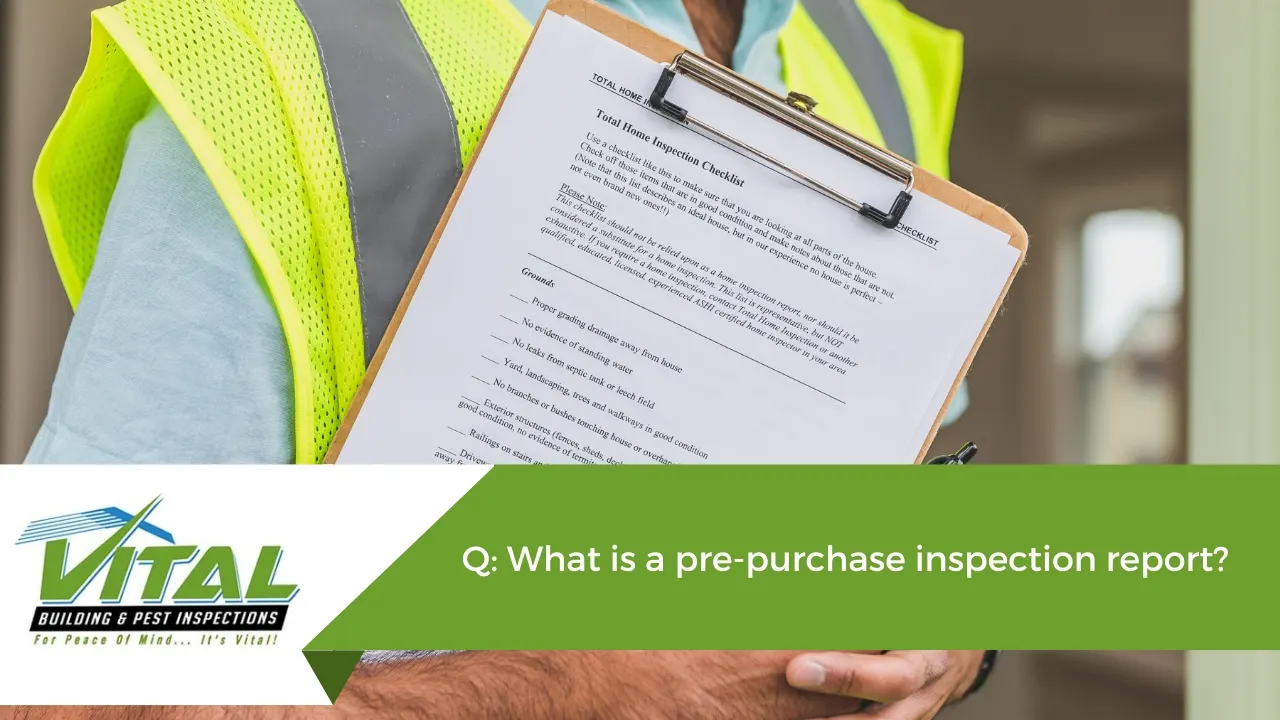
Answer: Inspectors furnish inspection reports after the inspection is accomplished. The report contains a written account of the property’s condition, including the major and minor issues and suggested repairs. The report should provide buyers the necessary details they need to make a sound financial decision, that’s whether to buy the property or not.
Reliable real estate inspectors should be as detailed as possible when it comes to accomplishing the pre-purchase building inspection reports. They shouldn’t simply list down the findings, but more importantly, they should describe in details the issues found on the property. A typical report should include the following:
- Date and time of inspection
- Areas inspected
- Areas not subject to inspection
- Photographs of the property
Aside from the detailed condition of the property inspected, the inspector should include details and suggestions regarding the defects and other findings on the property. These may also include information on safety hazards, evidence of presence of termites and other pests (if pest inspection is requested), and areas requiring periodic maintenance.
Other request from potential buyers can also be included in the report, like the possible timeframe to accomplish the repairs, if needed.
You can see how Vital sets out the findings and photos on the sample report page. Your inspector walks you through the findings and answers your questions about the report.
Q: Does a new home require building inspection?
Answer: When buying a home, inspection should be considered whether the building is old or new. It isn’t only the defects that are checked during inspection. An experienced and qualified inspector should be able to identify if the house was constructed following the Australian building standards.
If you’re buying a newly built home or taking handover from a builder, Vital’s new home inspection checks the finished work before you settle or sign off.
Q: Where to get pre-purchase building inspection in Sydney?
Answer: Before you finally make the purchase, have the property inspected by Vital Building and Pest Inspections. Vital's experienced in-house inspectors carry out every pre-purchase building inspection, along with pest inspections and Vital's other building inspection services.
Vital's inspectors are committed to helping buyers make smart decisions when it comes to their home buying. Vital provides detailed pre-purchase inspection reports, and your inspector explains them in greater detail to help buyers understand the condition of the property that they’re interested to buy. Vital's owner, Peter Ezeigwe, is a Housing Industry Association (HIA) member, and the business is based in Stanhope Gardens.
Have Vital inspect the home that you’re eyeing to buy with a pre-purchase building inspection in Sydney. Check the prices, book online, call 0401 012 074 or message Vital through the contact form. Vital serves Sydney and the Greater Sydney area.
Frequently asked questions
Do you need a building inspection before buying a house in NSW?
A building inspection isn't a legal requirement for buying a house in NSW, and it's 1 of the most useful steps you can take. It tells you about major defects, safety hazards and maintenance items while you can still negotiate, ask for repairs or reconsider. Most buyers book a combined building and pest inspection to cover both in 1 visit.
When should you book a pre-purchase building inspection?
Book it before you exchange contracts, or within the cooling-off period if you've exchanged on a private sale. Properties sold at auction have no cooling-off period, so inspect before auction day. Peter isn't a lawyer, so confirm the timing that suits your contract with your solicitor or conveyancer, then book online.
What's the difference between a building inspection and a pest inspection?
A building inspection to AS 4349.1-2007 reports on the condition of the building: structural defects, cracking, moisture, safety hazards and maintenance items. A timber pest inspection to AS 4349.3 looks for termites, borers and wood decay, and the conditions that attract them. Vital offers both, and a combined inspection covers them in 1 visit.
Can you attend the building inspection?
Yes. You're welcome to attend the inspection, meet your inspector and ask questions on site. Seeing the findings in person makes the report easier to follow, and your inspector walks you through the findings and answers your questions about the report afterwards too. See the sample report for how each finding is set out.
Does a building inspection check electrical wiring and plumbing?
A building inspection checks electrical and plumbing visually, noting signs like old switchboards, water stains, leaks and drainage issues. Testing the wiring or the plumbing system is work for a licensed electrician or plumber, and the report recommends one when it finds something that needs a closer look.