
Guides
What types of pests are typically included in a pest inspection?
Does pest control include mice? Rodent control is a common service from licensed pest managers, while a pest inspection to AS 4349.3 covers termites, borers and timber decay. This guide sets out the pests found in Sydney homes, the signs of each and who to call.
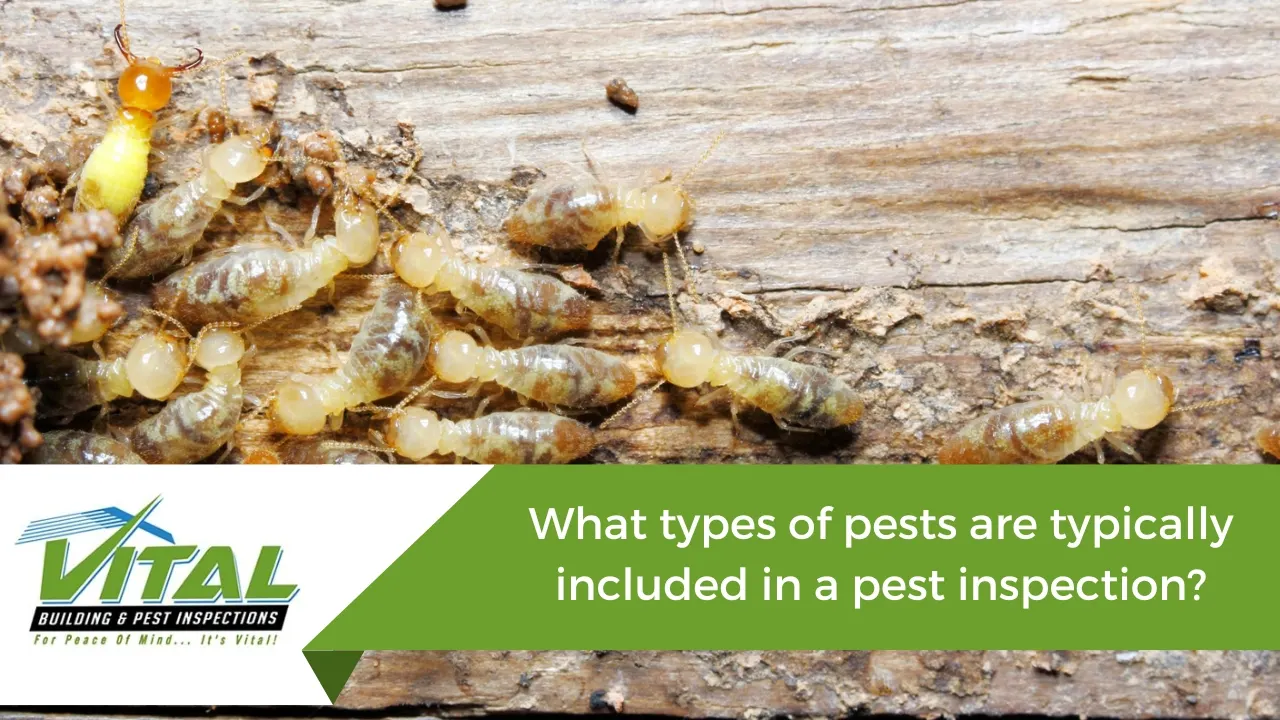
Does pest control include mice? Yes, pest control can include mice and rats. Rodent control is a common service from licensed pest managers, and some include it in a general treatment while others quote for it separately, so ask what's covered. A pest control inspection for a home purchase is a little different: a timber pest inspection to AS 4349.3 covers termites, borers and timber decay, the pests that damage the building itself. This guide sets out the pests commonly found in Sydney homes, the signs of each, and who to call for each one.
Vital inspects and reports, and a licensed pest manager treats any pests the report finds, so your report is fully independent.
Does pest control include mice at a glance
| Pest | Part of a timber pest inspection? | Who treats it |
|---|---|---|
| Subterranean termites | Yes | A licensed pest manager |
| Wood borers | Yes | A licensed pest manager |
| Timber decay fungi | Yes | Fix the moisture source, then a builder or carpenter repairs the timber |
| Mice and rats | Noted if seen | A licensed pest manager, with rodent control |
| Cockroaches, ants and spiders | Noted if seen | A licensed pest manager, with a general pest treatment |
| Possums and birds | Noted if seen | A wildlife specialist |
Common pests to look for during a pest inspection
Termites
Subterranean termites, also called white ants, are the pest that matters most to a home. The NSW EPA's page on timber pests and fungi notes that they cause the most damage to timber in NSW. They reach timber through mud tubes from the soil and can work inside walls and floors for a long time before the damage shows. A termite inspection looks for them closely.
Wood borers
Some beetle larvae feed inside timber and emerge as adults through small round holes, often leaving fine powdery dust below them. The NSW EPA notes that lyctid beetles can live inside timber for over a year before they emerge.
Timber decay fungi
Brown, white and soft rot fungi break down timber that stays damp. Decay is a sign of a moisture source, such as a leak, poor drainage or a damp subfloor, and fixing that source is the first step.
Cockroaches and ants
Cockroaches are drawn to food and moisture, especially in kitchens, bathrooms and laundries, and Better Health Channel notes they need a daily source of water to survive. Ants can trail inside after food and water. Both are nuisance pests rather than structural ones, and a licensed pest manager can treat an established infestation.
Spiders
Most Australian spiders are harmless to people, while a few, such as the redback and funnel-web, can give a dangerous bite. Clearing webs from around doors, windows and eaves, and keeping garden beds tidy, helps keep them outside.
Possums and birds
Possums often find their way into roof spaces, and birds can nest in gutters, eaves and roof cavities. Your inspector notes signs of them in the roof space, such as droppings, nesting material or damaged insulation, so you can arrange the right specialist.
Insects, rodents, and beyond: A comprehensive guide to rodent pest inspections
Rats and mice are the rodents most often found in homes. Health Victoria's page on rodents and pest control names the Norway rat, the roof rat and the house mouse as the common pest species, and notes that rodents gnaw through many materials and can contaminate food.
Signs of rodents
Health Victoria lists gnawing or feeding damage, holes, smears and droppings as the signs to look for:
- Droppings. Norway rat droppings are banana or sausage-shaped, roof rat droppings are spindle-shaped, and house mouse droppings are small and spindle or irregular-shaped.
- Gnawed holes. Mice gnaw holes up to 20 mm across in walls, partitions and floors, while rat holes are larger, about 80 mm.
- Feeding signs. Mice nibble the outside of grains and leave the core, while rats often leave crumbs or smaller pieces.
- Nests. Rodents build hidden nests from cardboard, paper, straw and rags.
- Smears. Marks along walls and around holes where rodents regularly travel.
- Noises. Scratching in the roof space or walls, especially at night.
Peter's guide to the signs of rodents has more on what to look for.
Keeping rodents out
Health Victoria notes that mice can fit through gaps as small as 8 mm, so even small openings are worth sealing. Its advice is to keep hygiene high and remove clutter, excess garden foliage, plumbing leaks, food scraps and nesting sites. Better Health Channel adds keeping wood and rubbish piles off the ground. In practice:
- seal gaps around pipes, cables, doors and vents
- store food in sealed containers and clear up food scraps
- fix leaking taps and pipes
- keep the garden trimmed back from the house and the roof line
- store firewood and other materials off the ground and away from the walls
Rodent control
Health Victoria notes that pest control operators usually use rodenticides, either single-dose or multiple-dose baits, and that trapping is used where baits aren't suitable, such as in food premises. Health Victoria also advises reading the label and keeping baits away from children, pets and wildlife. Better Health Channel recommends a professional licensed pest control operator, who is trained in identifying and managing pests.
Pests during your inspection
A pest inspection is the time to look closely at the parts of a home where pests hide. Your inspector checks the interior, the roof space, the subfloor and the garden, including fences, stumps, retaining walls and outbuildings, where they can be safely reached.
The small and the hidden
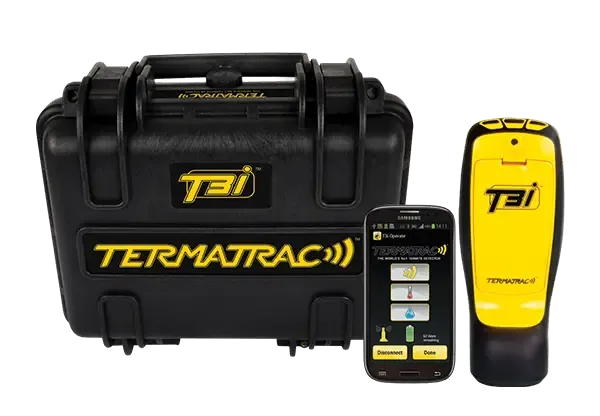
Termites and borers are hard to see, because they work inside timber. Where appropriate, your inspector may use a Termatrac T3i to help check for termite movement behind walls, a thermal imaging camera to show temperature differences that can point to nests or damp, and a moisture meter to read the moisture in timber, all without cutting into the home.
The conditions that attract pests
Many pests are drawn by the same things: moisture, food and shelter. Your Vital report sets out the conditions that attract timber pests, such as damp, poor ventilation, timber touching the ground and garden beds piled against the walls, so you can deal with them.
Help the inspector see more
Clear access to the roof space and subfloor, move stored items away from the walls, and point out anything you've noticed, such as droppings, mud tubes or damaged timber, so it gets a closer look.
The importance of identifying and addressing pest infestations
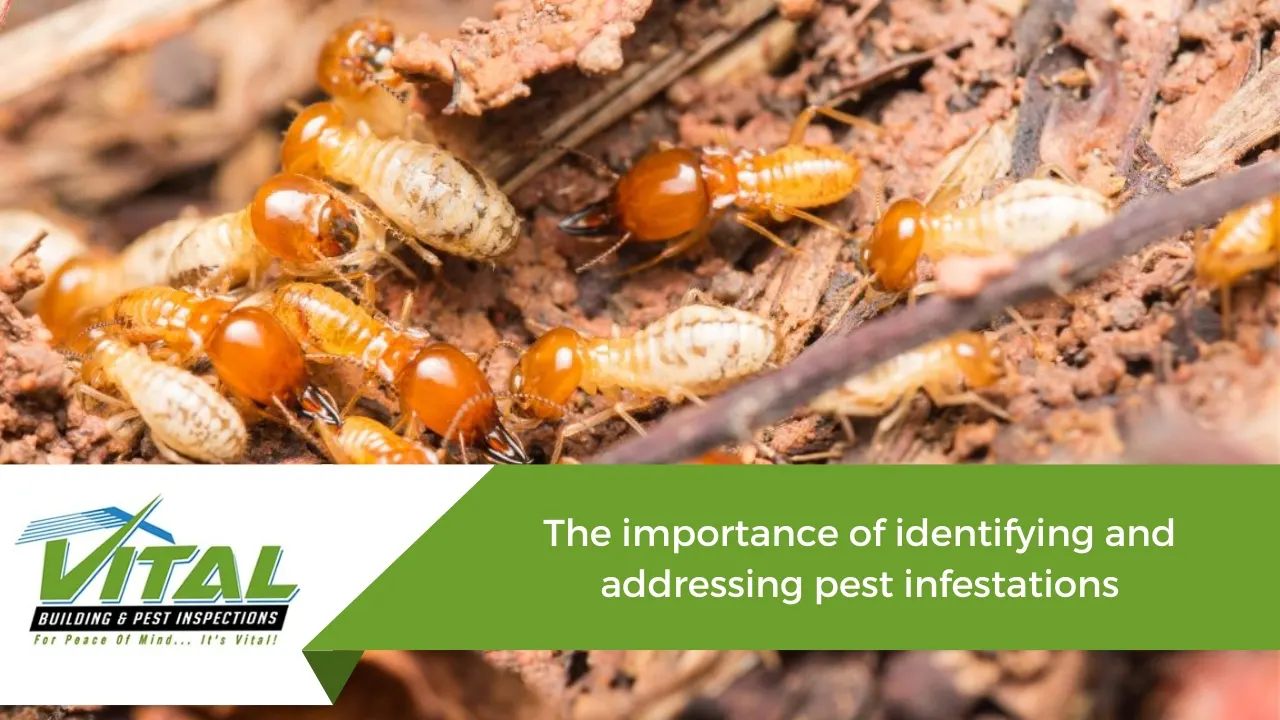
Identifying the pest comes first, because each one needs a different response. Better Health Channel suggests identifying the pest before buying any pesticide, and Health Victoria notes the importance of correctly identifying the type of termite before treatment begins.
Finding pests early brings real benefits:
- The building stays sound. Termites, borers and decay can damage floor framing, wall frames and roof timbers, and finding them early keeps repairs small.
- You can negotiate with confidence. If you're buying, a report that finds activity or damage lets you ask the seller to treat and repair, or factor the cost into your offer.
- Your home stays comfortable. Dealing with rodents and cockroaches early keeps kitchens and living areas clean.
- You know what to fix. A report that lists the conducive conditions shows you how to make your home less attractive to pests.
The NSW EPA's page on engaging a pest management technician explains that pest management technicians in NSW must be licensed, so ask to see the licence of anyone who treats your home.
If pests are found in homes
Pests can affect your health as well as the building. Rodents can contaminate food and surfaces, cockroaches can spread through kitchens and pantries, and a few spiders can give a dangerous bite. If you have any concerns about your health, your GP is the right person to talk to.
When a pest is found:
- Leave termites undisturbed, so they stay where they can be found and treated.
- Read the report, and talk through the findings with the inspector.
- Call a licensed pest manager to treat termites, rodents, cockroaches or other pests.
- Call a builder or carpenter to repair any damaged timber, once the activity has been treated.
- Fix the conditions that drew the pests in, such as leaks, damp and clutter.
- Book a follow-up inspection to confirm termite activity has stopped, and keep up a yearly inspection, as AS 3660.2 recommends.
Trust the experts to keep your property pest-free
Vital's own in-house inspectors carry out every pest inspection across Sydney, and because Vital inspects without treating, your report is fully independent. Vital's timber pest inspection follows AS 4349.3, and if your inspector notices signs of other pests, such as rodents or cockroaches, the report notes them so you can arrange pest control.
The report sets out any termite activity, borer activity and timber decay, the damage, and the conditions that attract timber pests, with photos and recommendations. Vital confirms when it will be ready at the time you book. Your inspector walks you through the findings and answers your questions about the report.
Book a pest inspection, see the prices, or call Vital on 0401 012 074. Peter's blog has more guides on termites, rodents and other pests.
Frequently asked questions
Does pest control include mice?
Pest control can include mice and rats, and rodent control is a common service from licensed pest managers, who usually use baits and, in some situations, traps. Some include rodents in a general treatment and some quote for them separately, so ask what's covered. In NSW, pest management technicians are licensed by the NSW EPA.
What pests does a pest inspection cover?
A timber pest inspection to the Australian Standard, AS 4349.3, covers subterranean termites, wood borers and timber decay fungi, and the conditions that attract them, such as damp and timber touching the ground. These are the pests that damage the building itself. Your inspector also notes any signs of other pests, such as rodents or cockroaches.
Does a pest inspection check for rats and mice?
Rodents sit outside the Australian Standard for timber pest inspections, which focuses on termites, borers and timber decay. During the inspection, though, the roof space, subfloor and cupboards are checked closely, so your inspector notes any droppings, gnawing or nests found, and you can then arrange rodent control with a licensed pest manager.
What are the signs of mice in a house?
Health Victoria lists gnawing damage, holes, smears and droppings as the signs to look for. Mouse droppings are small and spindle-shaped, and mice gnaw holes in walls and floors and nibble the outside of grains. Nests made of paper, cardboard or rags in hidden spots are another clue, especially in the roof space, garage and kitchen cupboards.
Is it a possum or a rat in my roof?
Better Health Channel notes that what you assume to be rats in your roof could be possums, so identify the animal before buying any product. Possums are larger and heavier, and they're native animals that need a different approach from rodent baiting. A licensed pest manager or a wildlife specialist can confirm which one you have.