
Guides
Can a pest inspection report be used to identify structural issues in a property?
Yes, a pest inspection can find structural damage caused by timber pests, such as termite damage to floor framing or rot in bearers and joists. For the full picture of the structure, pair it with a building inspection, which covers movement, cracking and the rest of the building.
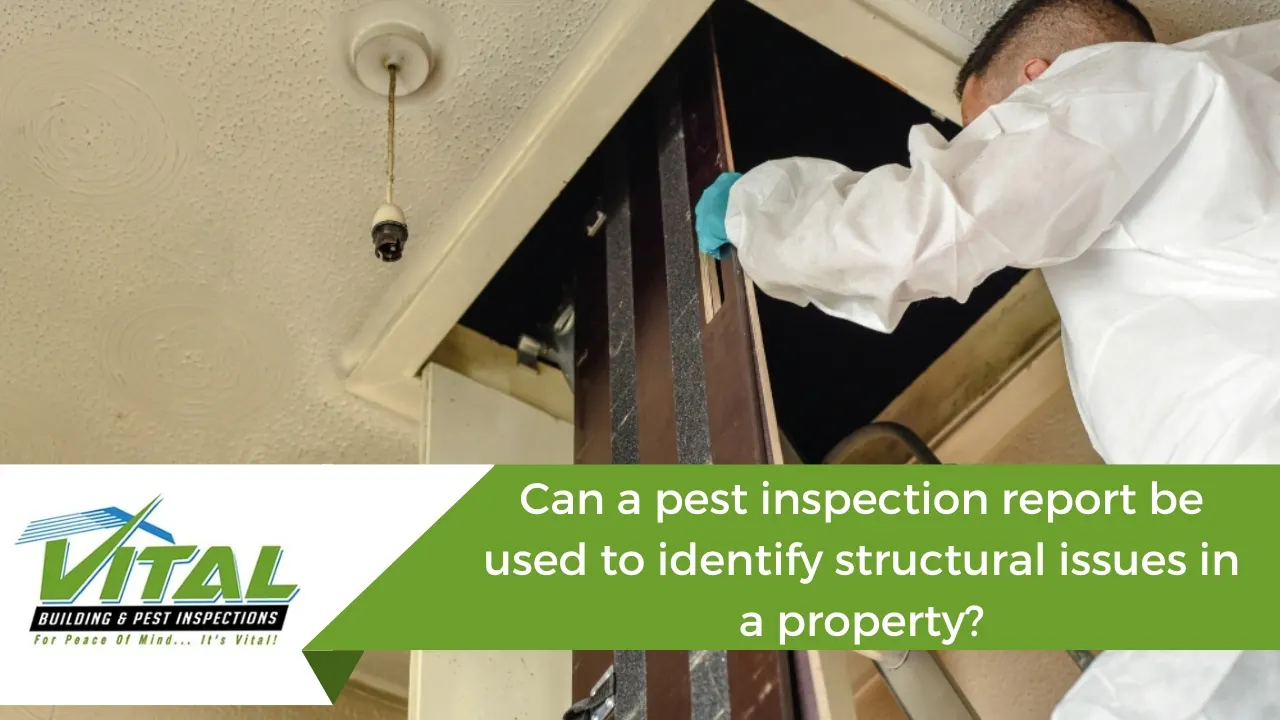
A pest inspection can find structural damage caused by timber pests: termite damage to floor framing, wall frames and roof timbers, borer damage, and rot in damp timber. A termite inspection report records that damage alongside any live activity, and a building inspection covers the rest of the structure, so together they give you the full picture.
Can a pest inspection find structural damage? What the report covers
A pest inspection report, also known as a timber pest inspection report, is a written assessment of timber pests in a property. Vital inspects to AS 4349.3, the Australian Standard for timber pest inspections, which covers 3 groups:
- Subterranean termites, including live activity, nests and damage.
- Borers, the wood-boring beetles whose larvae tunnel through some timbers.
- Wood decay fungi, which cause rot in timber that stays damp.
The report also lists conditions conducive to timber pests, such as moisture, poor subfloor ventilation, timber in contact with soil and garden beds built up against the walls. These are the items you can fix to make the home less attractive to termites.
Purpose of pest inspection report
The purpose is to tell you, before you buy, whether timber pests are active in the property, whether they've caused damage, and what you can do about it. A termite inspection report gives you the facts to:
- negotiate the price or ask the seller to treat and repair before settlement
- plan a treatment and a termite management system
- fix the conditions that attract pests
- book regular inspections to keep an eye on the home
The NSW Government's guide to building and pest inspection reports explains that a building report identifies visible termite damage but not whether termites are still active, which is why it recommends a separate pest inspection, especially where termites are common.
Pest inspection report and structural issues
Identification of structural issues during pest inspection
The inspection covers the accessible areas of the property: the interior, the roof space, the subfloor, the exterior and the site, including fences, sheds and trees. Your inspector looks for mud leads, damaged timber, frass, borer holes and rot, and taps and sounds timbers to find hollow sections.
Termites work inside timber, so the damage is often hidden behind paint and plaster. Your inspector uses tools that help find it without opening the walls:
- a thermal imaging camera to show temperature differences that can point to termite nests or moisture behind walls
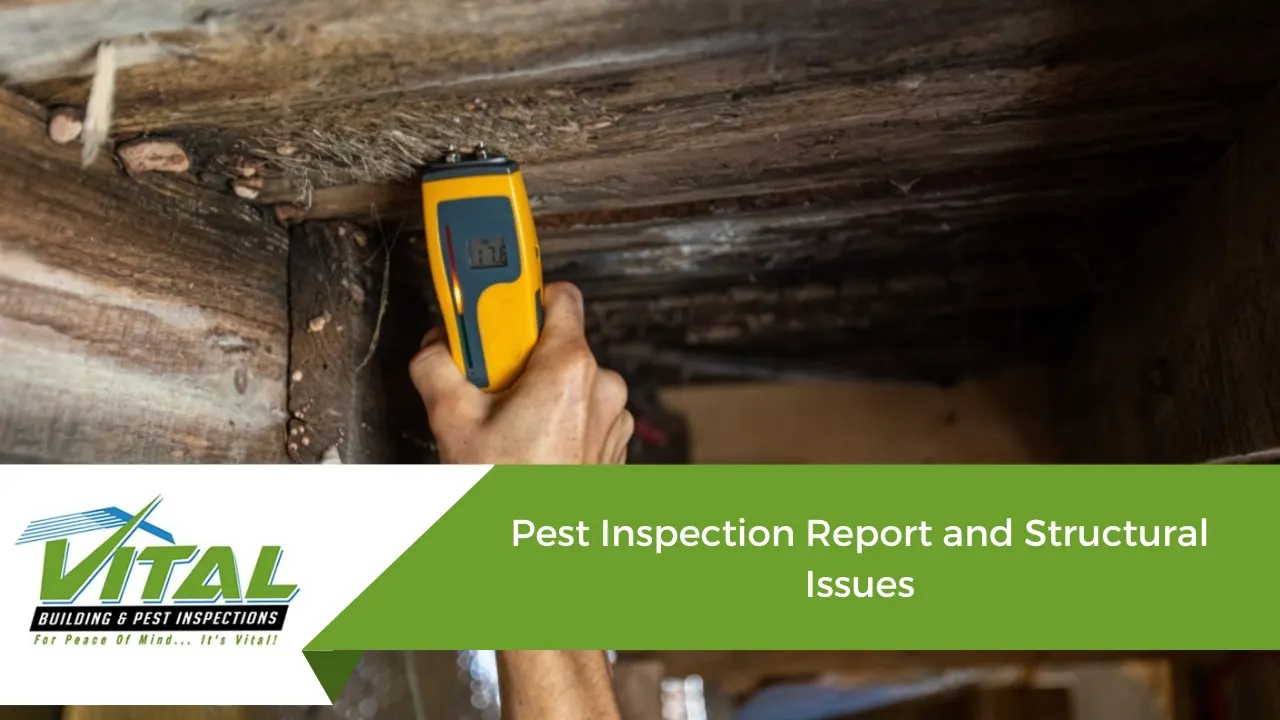
- a moisture meter to check damp areas, which attract termites and decay
- a Termatrac T3i to check for termite movement inside walls and timbers without drilling
When the inspection finds damage in a structural timber, such as a bearer, joist, stud or rafter, the report records where it is and how far it seems to extend, and recommends a builder or structural engineer to assess repairs.
What a pest inspection leaves to the building inspection
A pest inspection is focused on timber pests. Cracking, movement, roof coverings, wet areas, drainage and the rest of the building are covered by a building inspection to AS 4349.1-2007. Wiring and plumbing sit with licensed trades in both cases.
That's why most buyers book a combined pre-purchase building and pest inspection. Vital covers both in 1 visit, so the structure and the timber pest findings are read together.
Importance of hiring a qualified inspector
The quality of a pest report depends on the inspector's training, experience and tools. Vital's owner, Peter Ezeigwe, holds a Certificate IV in Building and Construction and a Diploma of Building and Construction, and has a background in building restoration and disaster assessment, which gives him a close understanding of how moisture and decay affect a building's timbers. NSW Government advice is to check that your inspector has adequate insurance, particularly professional indemnity cover.
Common structural issues found during pest inspection
Termites and other wood-destroying organisms
Subterranean termites eat the inside of timber and leave a thin outer shell, so floor framing, skirting boards, door frames, wall studs and roof timbers can lose strength before the damage shows. Borers tunnel through some hardwood sapwood and older softwood floorboards, leaving small exit holes and fine dust.
The report tells you whether the activity is live or old, which timbers are affected, and whether treatment or repair is the next step. Peter's guide to what a timber pest inspection is explains the process in more detail.
Rot and decay
Wood decay fungi grow in timber that stays damp. Subfloor bearers and joists, deck framing, window sills, fascias and timber in contact with soil are the usual places. Decay softens timber and reduces its strength, and damp, decaying timber also attracts termites.
Your inspector records each area of decay, may use a moisture meter to help assess the likely source, and recommends a carpenter or builder for the repair.
Water damage
Leaks from showers, roofs, gutters and plumbing keep timber wet, and that moisture leads to decay and attracts termites. Thermal imaging helps your inspector trace where water is reaching the structure, so you can fix the cause as well as the damage.
Foundation and subfloor conditions
Poor drainage and subfloor ventilation keep the soil and timbers under a home damp. A pest inspection notes these conditions because they encourage termites and decay. Movement and cracking in the footings and walls are assessed in the building inspection, and a structural engineer can advise where the pattern calls for one.
Recommendations for buyers and sellers
Recommendations for buyers
- Book a combined building and pest inspection before you exchange, or during the cooling-off period on a private sale.
- Read the summary first, then the termite and decay findings, and ask your inspector to walk you through anything you're unsure of.
- Get a quote for treatment and repairs, and use it to negotiate or to ask the seller to fix the damage before settlement.
- Plan regular pest inspections once you move in. Peter's guide to how often to get a pest inspection explains the timing.
Recommendations for sellers
- An inspection before you list shows you any activity or damage while there's time to treat it and repair it on your terms.
- A clear, recent report helps buyers feel confident, and Vital's pre-sale inspection is built for this.
- Keep records of past treatments and termite management systems to show buyers.
Importance of hiring a qualified inspector for buyers and sellers
Whichever side of the sale you're on, a qualified inspector gives you a report you can rely on. Every inspection is carried out in-house by Vital's own experienced inspectors, with no subcontractors, so the business that inspects the property also prepares your report. You're encouraged to attend the inspection, meet your inspector and ask questions on site. Your inspector walks you through the findings and answers your questions about the report.
For owners who need a detailed record of damage and defects in a home they already own, Vital's building defects reports cover the whole building. There are more guides on termites and timber pests on the guides page.
Frequently asked questions
What is a pest inspection report and what is its purpose?
A pest inspection report, also called a timber pest or termite inspection report, records whether there are termites, borers or wood decay in a property, any damage they've caused, and the conditions that attract them. Its purpose is to show you the timber pest picture before you buy, so you can plan treatment, repairs or prevention.
What are some common structural issues found during a pest inspection?
The structural issues a pest inspection finds are the ones timber pests cause or encourage: termite damage to floor framing, wall frames and roof timbers, borer damage in floorboards and older timbers, rot in damp bearers, joists and decks, and the moisture and poor ventilation that lead to them.
Are there any limitations to a pest inspection report in identifying structural issues?
A pest inspection focuses on timber pests, so it reports structural damage linked to termites, borers and decay. Cracking, movement, roof defects and wet areas sit in a building inspection, which is why Vital's pre-purchase building and pest inspection covers both in 1 visit.
Is it important to hire a qualified inspector for a pest inspection report?
Yes. A qualified inspector knows where timber pests hide, how to read the signs and which tools to use, and reports to the Australian Standard for timber pest inspections. Vital's inspectors use a thermal imaging camera, a moisture meter and a Termatrac to help look for signs of activity behind walls without drilling, and explain each finding.
How can a pest inspection report benefit buyers and sellers of a property?
Buyers learn about timber pest activity and damage before they commit, which supports a price negotiation, a repair request or a treatment plan. Sellers can treat activity and repair damage before listing, and show buyers a clear report, which builds trust and keeps the sale moving.
Can a pest inspection report be used to identify all structural issues in a property?
A pest inspection identifies structural issues linked to timber pests and the conditions that attract them. For movement, cracking, roof framing and the rest of the structure, a building inspection completes the picture, and a structural engineer can assess anything that needs calculations or a repair design.