
Guides
Why Pre-Purchase Building Inspections Are Crucial in the Australian Property Market
Why get a pre-purchase building inspection? It shows you the condition of a property before you commit: the major defects, safety items and overall condition, with photos and recommendations. In Sydney, where homes sell quickly and auctions have no cooling-off period, it gives you the facts to negotiate, plan repairs or move on while you still can.
Why get a pre-purchase building inspection? Because it shows you the condition of a property before you commit to buying it. The report sets out the major defects, safety items and overall condition, with photos and a recommendation for each finding, so you can negotiate, plan repairs or decide the property isn't the one while you can still act. In Sydney, where good homes sell quickly and auctions have no cooling-off period, having the report at the right time is what makes it count.
Why get a pre-purchase building inspection?
A home can look immaculate at an open inspection and still have issues behind the surface: a slow leak in a shower wall, movement in the footings, a roof that lets water in during heavy rain, or termites working inside a skirting board. A pre-purchase building and pest inspection looks past the presentation, so you buy on facts.
It gives you:
- A clear picture of the condition, with the major defects listed first and minor upkeep kept in proportion.
- Facts to negotiate with, such as a request for repairs before settlement or a price adjustment, backed by photos.
- A realistic budget, so the work a home needs is planned before you move in.
- Safety information, such as loose balustrades, unsafe stairs and visible materials that may contain asbestos.
- Timber pest findings, because the NSW Government's guide to building and pest inspection reports notes that a building report shows visible termite damage but not active termites, and recommends a separate pest inspection.
- Confidence to proceed, when the report confirms the home is in the condition you expected.
The same NSW Government guide notes that the agent must tell you about previous reports the seller commissioned, which can add useful background to your own.
What the inspection covers
The NSW Government lists the accessible areas an inspector checks, and a pre-purchase building and pest inspection with Vital covers:
- the interior, including walls, ceilings, floors, windows, doors, the kitchen, bathrooms and laundry
- the exterior walls, roof covering, gutters, downpipes and drainage
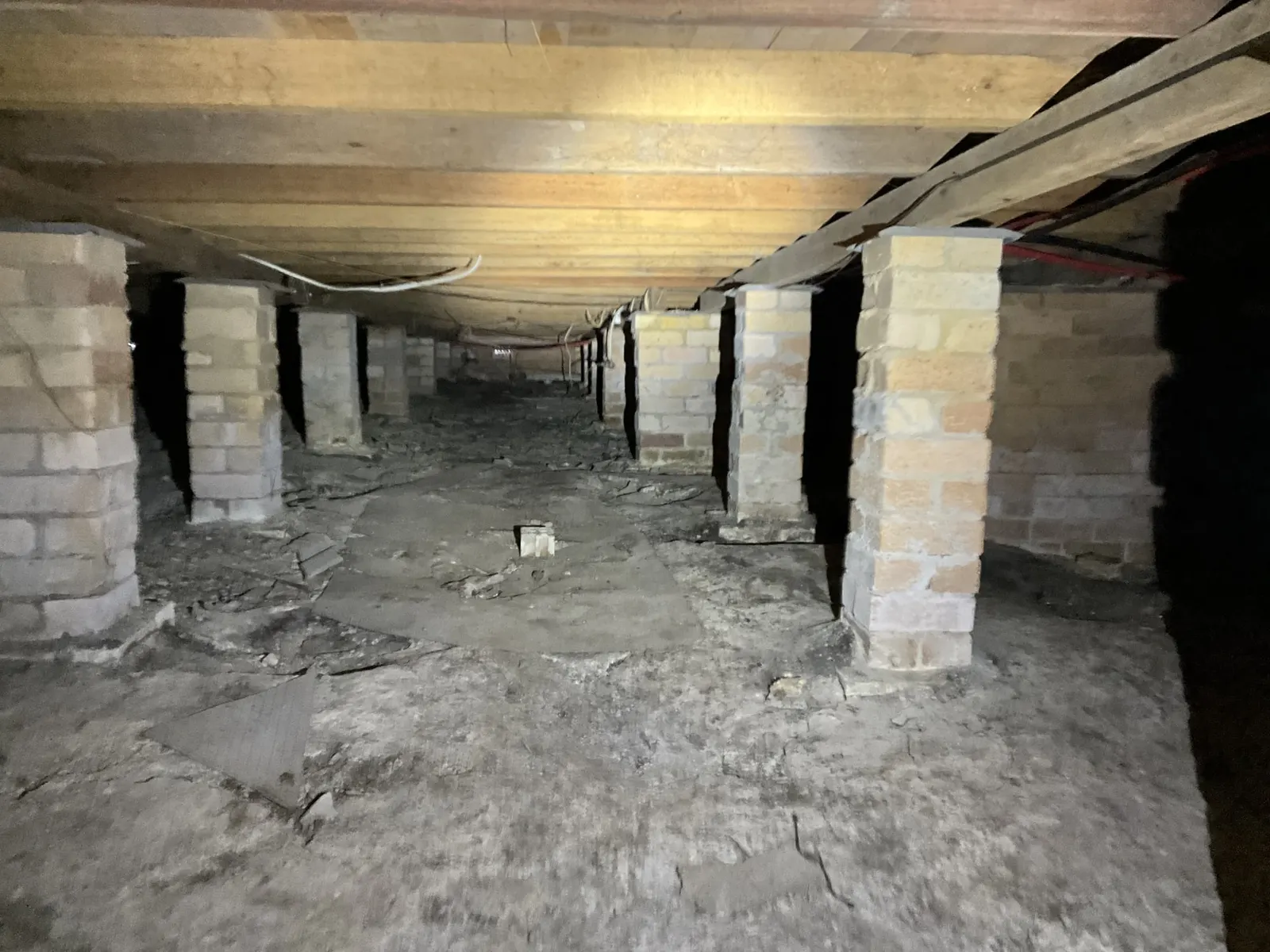
- the roof space and subfloor, where they can be safely reached
- the site, including outbuildings, retaining walls, steps, fencing, paths and driveways
- timber pests, including termites, borers and wood decay
Vital's inspectors work to AS 4349.1-2007 and AS 4349.3. Where appropriate, your inspector may use a thermal imaging camera and a moisture meter to help trace damp behind surfaces, and a Termatrac T3i to help check for termite movement behind walls and inside timber without drilling.
What buyers commonly find
- cracking and movement in walls, footings and floors
- roof leaks, broken tiles, rusted sheeting and worn flashings
- leaking showers and wet areas, and damp from poor drainage or rising damp
- mould where moisture has been sitting
- safety items, such as loose balustrades and trip hazards
- termite activity, termite damage and conditions that attract timber pests
- renovations and additions, where your conveyancer can check the approvals and certificates
What it means for your property
With the report in hand, you have clear choices:
- Negotiate. Ask the seller for specific repairs before settlement, a price adjustment, or a mix of both, through your agent or conveyancer. Peter's guide to whether you can negotiate repairs with the seller covers how.
- Plan. Get quotes for the major items and build them into your budget and your first year in the home.
- Step back. If the findings change your view of the property, talk to your conveyancer about your options. The NSW Government's guide to contracts and deposits explains that a buyer who withdraws during the cooling-off period pays 0.25% of the purchase price.
- Proceed with confidence. When the findings are minor or already priced in, you buy knowing exactly what you're getting.
Some properties deserve a particularly close look: older homes, homes with renovations or additions, homes on sloping or reactive clay sites, and properties near bushland or with established gardens, where termites are active. For an apartment or townhouse, the NSW Government notes that a strata inspection covers the unit and its immediate exterior, and a strata inspection with Vital starts there.
When to book an inspection
Timing decides how useful the report is. The NSW Government explains that the cooling-off period on a private treaty purchase is 5 business days, ending at 5pm on the fifth business day after exchange, that there's no cooling-off period at auction, and that inspectors usually need 2 to 3 days' notice.
As soon as you're serious
Book the inspection once you're seriously considering a property, giving the agent time to arrange access to every room, the roof space, the subfloor and any outbuildings.
Private treaty
Have the inspection done before you exchange, or early in the cooling-off period, so there's time for quotes and advice.
Auction
Have the report in hand before auction day, and use it to set your limit, because there's no cooling-off period at auction.
Off the plan or brand new
Book a new home or pre-handover inspection before the final payment, so the builder can fix listed defects as part of finishing the job.
Vital confirms when your report will be ready at the time you book. You're encouraged to attend the inspection, meet your inspector and ask questions on site. Your inspector walks you through the findings and answers your questions about the report.
How to choose a pre-purchase inspector
The NSW Government suggests using a suitably qualified person, such as a licensed builder, building surveyor or architect, and checking that they have adequate insurance, particularly professional indemnity insurance. When you compare inspectors, ask:
- What are your qualifications and building background?
- Does your report follow the Australian Standards for building and timber pest inspections?
- Can I see a sample report?
- Can I attend, and will you walk me through the findings?
- What tools do you use to find moisture and termite activity?
- When will I have the report?
Vital's owner, Peter Ezeigwe, holds a Certificate IV in Building and Construction and a Diploma of Building and Construction, and he's a Housing Industry Association (HIA) member. He has a background in building restoration and disaster assessment, so he knows how buildings respond to water and movement. Every inspection is carried out in-house by Vital's own experienced inspectors, with no subcontractors, so the business that inspects the property also prepares your report. You can see how Vital's findings are set out in the sample report, and the prices are on the pricing page.
Peter carried out a building and pest inspection for a property we are purchasing and we were very happy with the service.
The inspection report was detailed, easy to understand and included clear photos and explanations of all findings. Peter was thorough in identifying both the strengths of the property and the minor issues that required attention, which gave us confidence in making an informed decision.
The report was delivered promptly and clearly outlined the condition of the property without being alarmist. We particularly appreciated the detailed building and pest assessments and the practical recommendations provided.
I would happily recommend Peter and Vital Building & Pest Inspection to anyone looking for a professional and reliable pre-purchase inspection.
Despite the last minute booking request, Peter did not turn me down and made his time to attend our new place in Castle Hill to conduct building inspection. His post-inspection report was highly-detailed and he even provided verbal advice/suggestions on how to rectify certain issues.
I’ve already recommended Peter to my friends and colleagues, and we all equally agreed how helpful Peter’s service was in helping us get the right property.
Thank you Peter.
Peter got back to me quickly and scheduled an inspection without any delay. Communication was excellent.
You can send a booking request with the address, and there are more guides on buying a home on the guides page.
Frequently asked questions
Why get a pre-purchase building inspection?
It shows you the condition of the property before you commit, including major defects, safety items, leaks, movement and timber pest activity, with photos and recommendations. With the report in hand you can negotiate on price or repairs, plan work into your budget, or decide the property isn't the one for you, while you can still act.
When should I book a pre-purchase building inspection?
Before you exchange contracts, or early in the cooling-off period on a private treaty sale. The NSW Government says there's no cooling-off period at auction, so for an auction, have the report in hand before the day. It also notes inspectors usually need 2 to 3 days' notice, so book as soon as you're serious about a property.
Does a pre-purchase building inspection include termites?
The NSW Government notes that a building report shows visible termite damage but not active termites, and recommends a separate pest inspection. A combined building and pest inspection covers the building and timber pests in 1 visit and 1 report, which is the usual choice when you're buying in Sydney.
Is a pre-purchase inspection worth it on a newer home?
Yes. A newer home can still have defects in waterproofing, drainage, roofing and finishes, and termites are active across Sydney whatever the age of the home. The report also gives you a dated record of the home's condition, which is useful if you later need to raise a defect under the statutory building warranties.
Can I use the inspection report to negotiate?
Yes. Focus on the major defects and safety items, back them with quotes from trades, and make a clear request for repairs, a price adjustment or both, through your agent or conveyancer. Have any agreement written into the contract before you exchange, and ask your conveyancer about your options within the cooling-off period.