
Inspection services
Water damage inspection and moisture assessment in Sydney
A water damage inspection gives you an independent view of the moisture signs in your home, such as staining, swelling, bubbling paint and damp readings, with what they're likely to mean and who to call next. Every inspection is carried out in-house by Vital's own experienced inspectors.
A water damage inspection gives you a clear, independent view of the moisture signs in your home: what they are, where they sit and what to do next. Every inspection is carried out in-house by Vital's own experienced inspectors, with no subcontractors, and your inspector assesses the ceilings, walls, floors, wet areas and building timbers that can be safely reached, then sets out each finding with photos in a written report. Vital's owner, Peter Ezeigwe, is a Moisture Detection and Remediation Specialist and brings a background in building restoration and disaster assessment, and that experience shapes how Vital reads damp in a home.
Moisture and water damage assessments
Moisture can affect the ceilings, walls, floors, wet areas and building timbers of any home. Staining, deterioration and elevated moisture readings can each point to a concern worth investigating further, and an inspection gives you a clear picture of what's there before you decide on repairs.
Vital's clients usually book a water damage inspection for 1 of these reasons:
- a stain on a ceiling after rain, or below a bathroom upstairs
- bubbling or peeling paint, or swollen skirting boards, near a shower, bath or laundry
- a musty smell, or mould that keeps coming back
- a shower, bath or balcony that has been leaking
- tiles that sound hollow, or grout that keeps cracking
- a home they're buying, selling or renting out that has had water through it, after a storm or a burst pipe
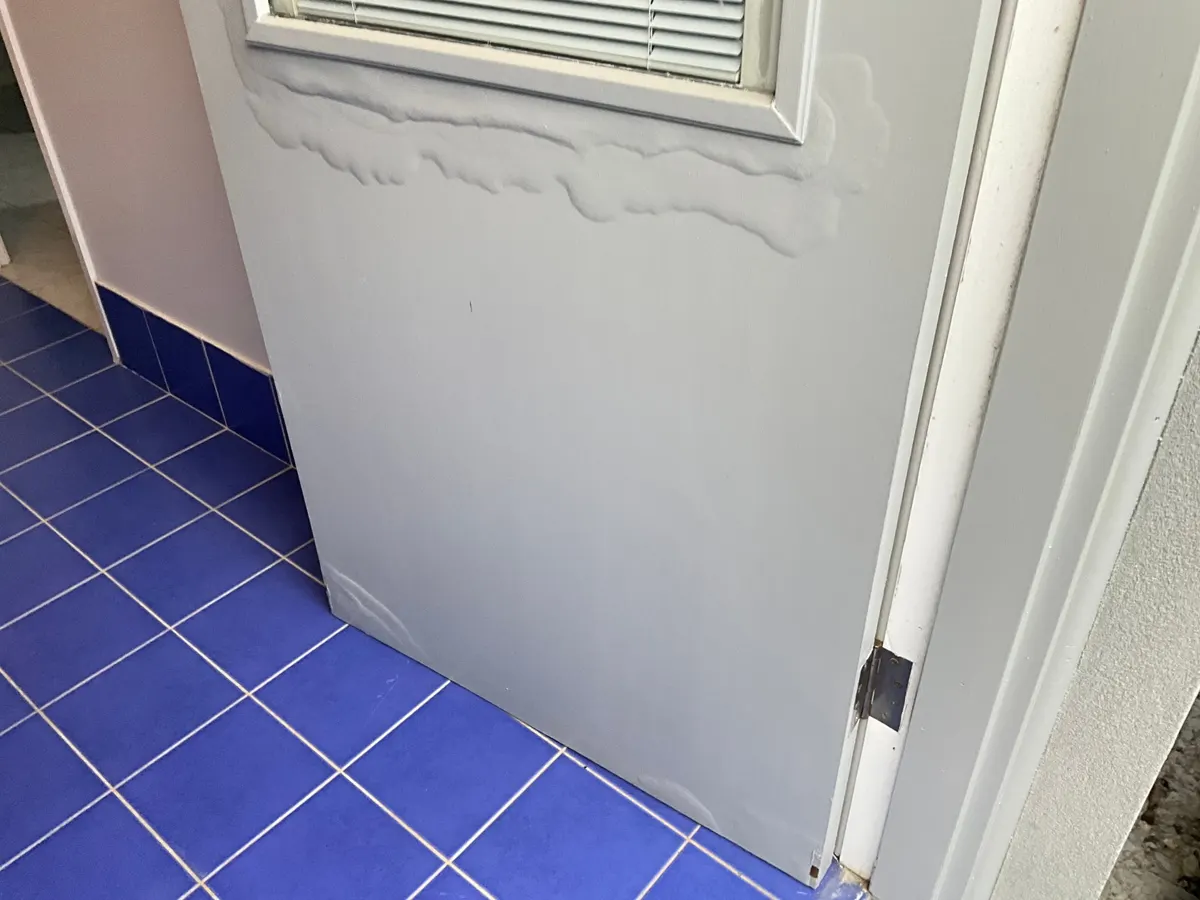
Common sources of moisture in a home
Water usually reaches a building in 1 of a few ways, and knowing them helps your inspector read the signs:
- Wet area leaks, through worn grout, perished silicone or waterproofing behind the tiles in showers, baths and laundries. The guide to leaks in wet areas shows the signs to watch for.
- Plumbing leaks, from pipes inside walls, taps, toilets and appliances.
- Roof leaks, around tiles, flashings, valleys, skylights, gutters and downpipes.
- Rising and lateral damp, where ground moisture moves up or into masonry walls. The guide to rising damp explains how it affects a building.
- Condensation, in bathrooms and laundries without an exhaust fan, and in roof spaces and subfloors with little airflow.
- Surface water, where the ground falls toward the house or soil and garden beds sit against the walls.
What your inspector looks at
Your inspector works through the home room by room and outside, starting with anything you've noticed. A water damage inspection covers these areas wherever they can be safely reached:
- Ceilings, for staining, sagging, cracking and mould, especially under bathrooms, roof valleys and skylights.
- Walls, for bubbling paint, flaking render, salt deposits, swollen skirting boards and damp at the base.
- Floors, for warped or cupped timber, lifting floor coverings and loose or hollow tiles.
- Wet areas, including showers, baths, vanities, laundries and floor wastes, with their grout, sealant and tiles.
- The roof space, for water staining on timbers and sarking, and the condition around penetrations.
- The subfloor, for damp soil, ponding, ventilation and the condition of the timbers.
- The outside, including gutters, downpipes, site drainage, soil levels against the walls, and weep holes and vents.
Signs of moisture from Vital's inspections
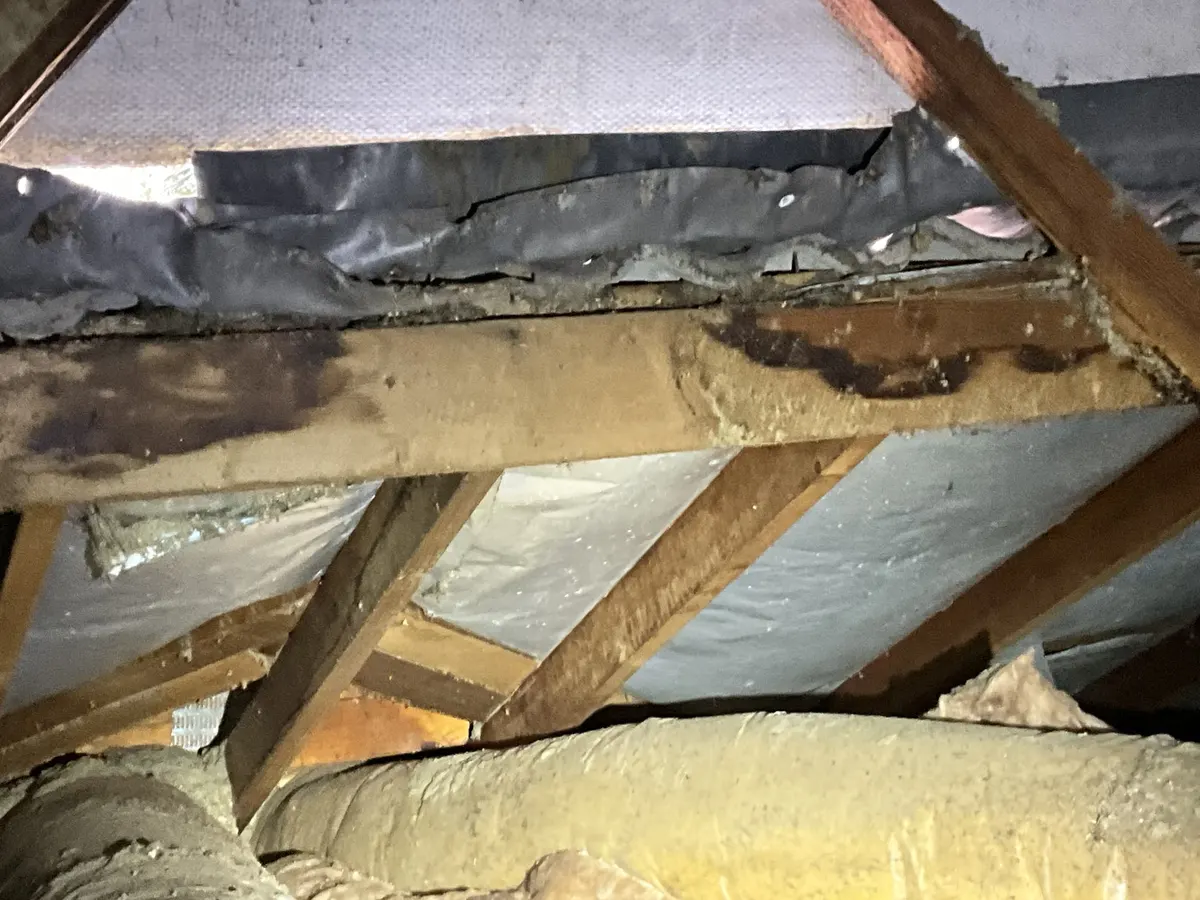
Water staining on a roof timber under worn sarking in a North Richmond roof space. 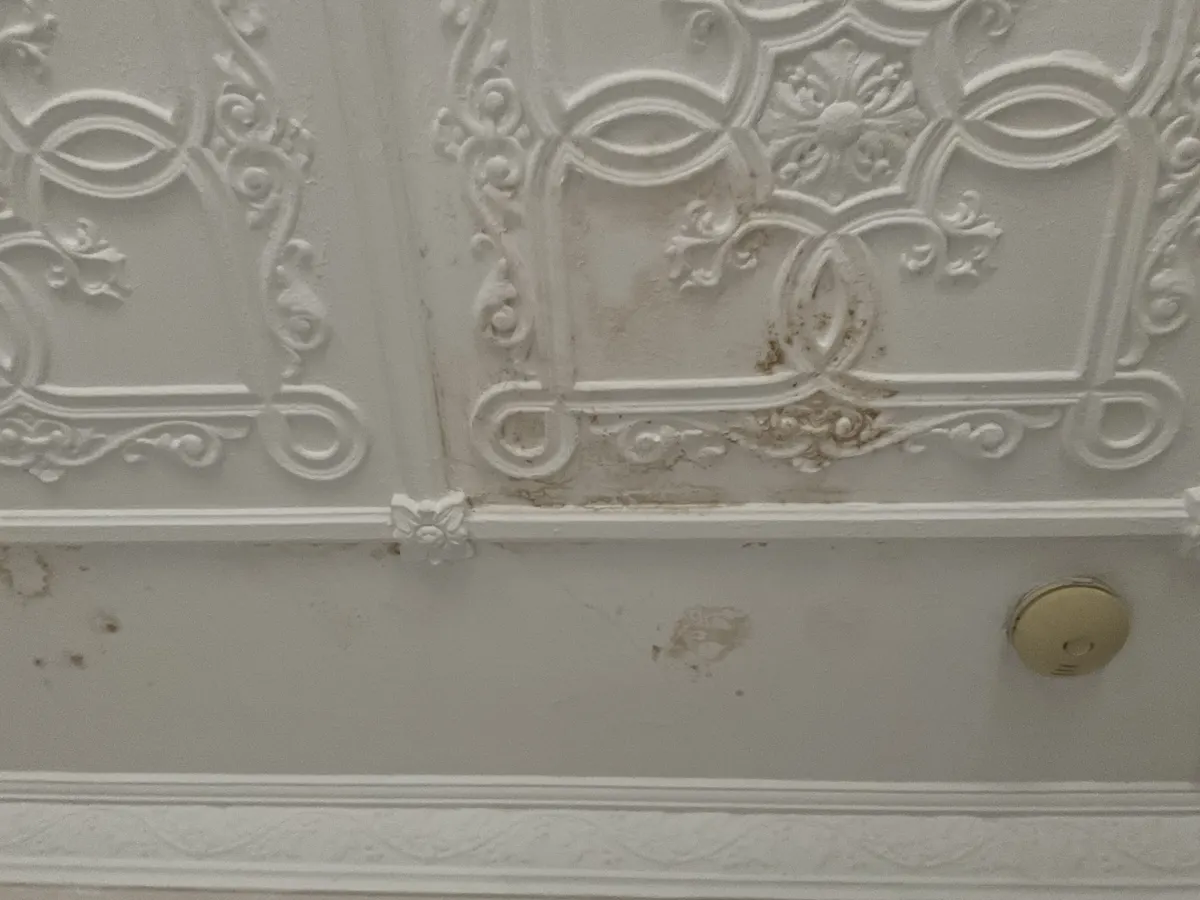
Water staining on a pressed metal ceiling in a Leichhardt home. 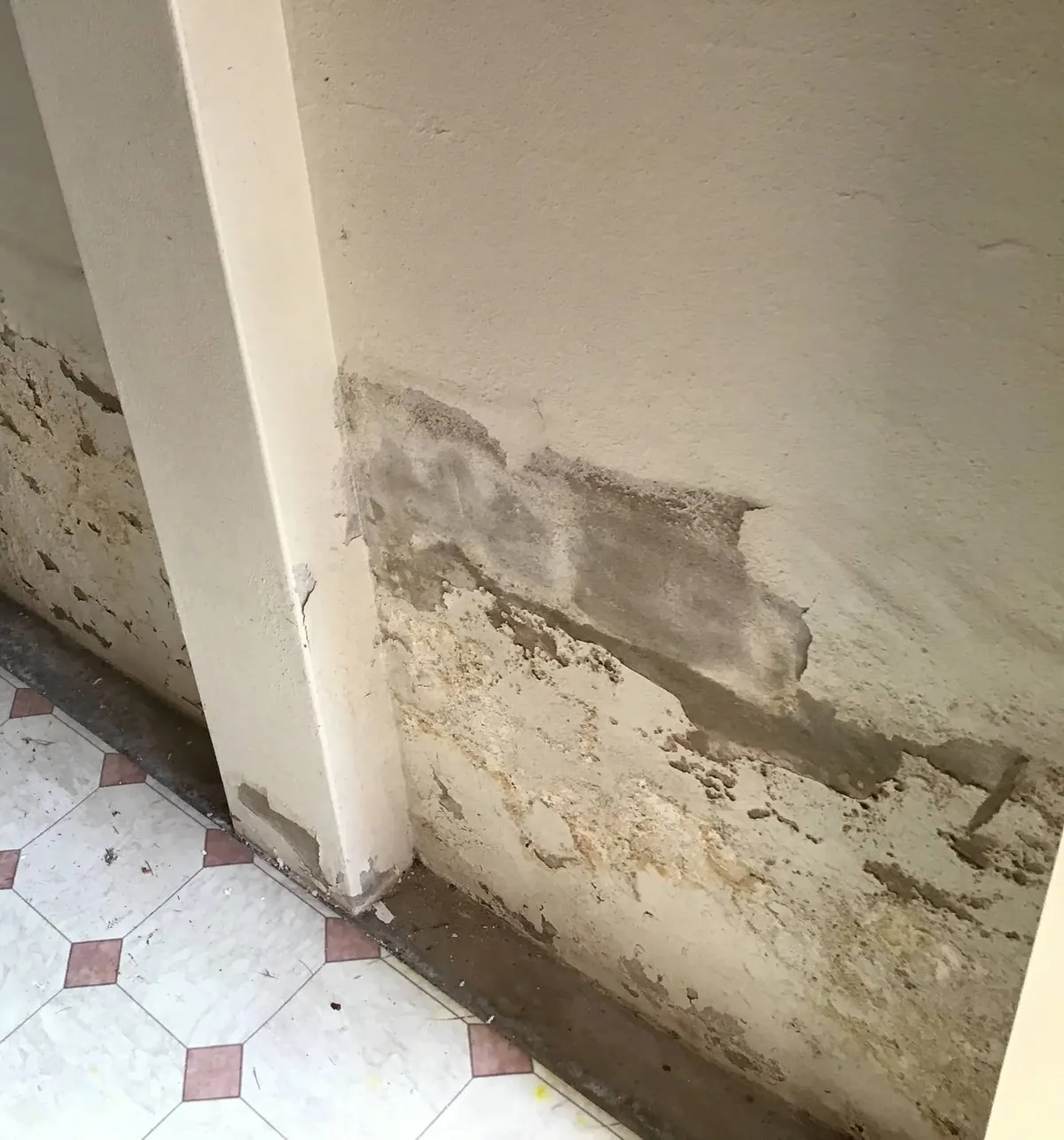
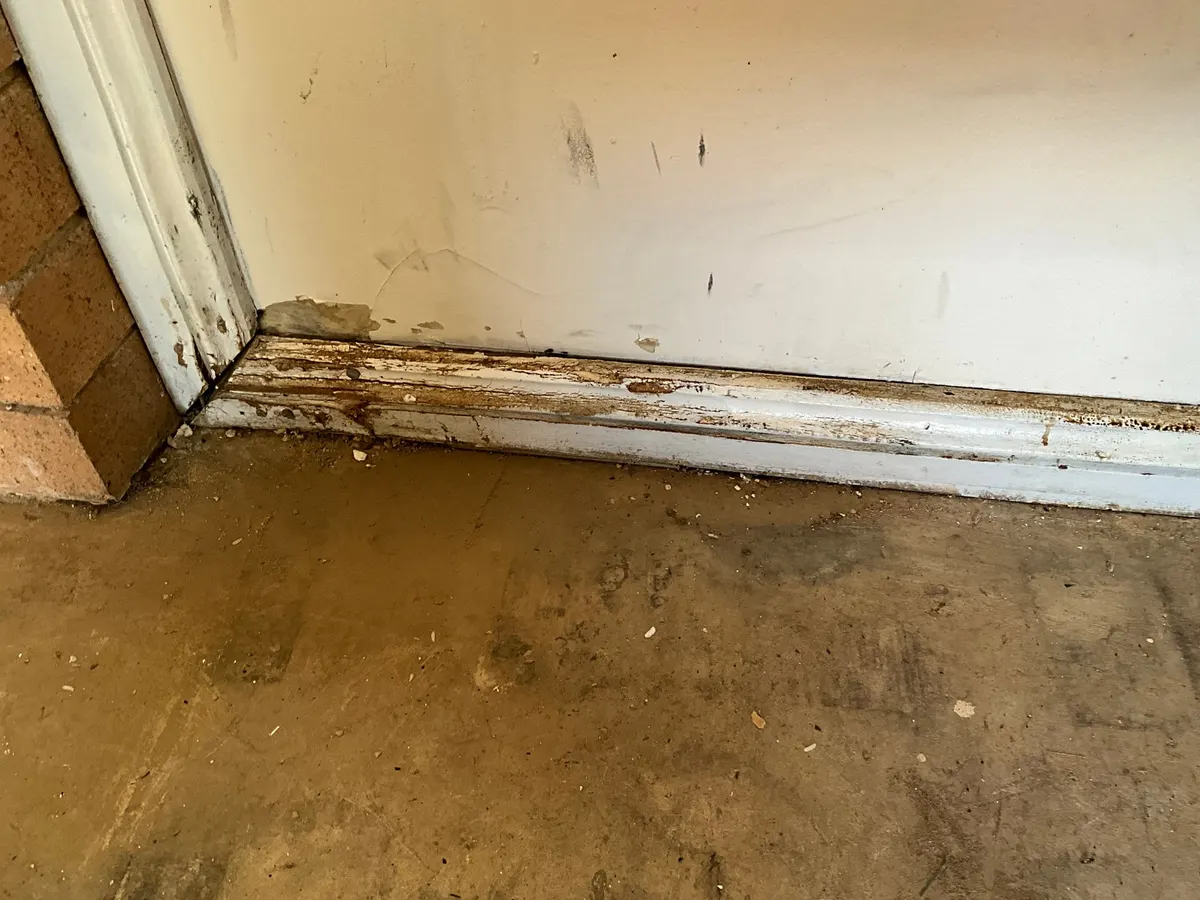
Damaged paint and render at the base of an internal wall in West Pennant Hills.
How Vital assesses moisture
Your inspector examines the readily accessible areas and records the signs that can be seen: where they are, how far they appear to extend and what they're likely to mean.
Where appropriate, your inspector may use supplementary equipment such as moisture meters, thermal imaging cameras or termite detection devices to help assess signs seen during the inspection. Vital's moisture equipment includes laser, thermal imaging, pin and non-invasive moisture detection equipment, and the condition of the job decides which tool suits it, so a moisture detection reading or a thermal imaging camera is used where it helps your inspector assess a particular sign.
Instrument readings are supplementary evidence. They help your inspector decide which signs deserve a closer look, and the cause and full extent of any concealed damage are confirmed when the right trade opens up the area. Patterns help too: damp that rises from the floor up a masonry wall often points toward rising damp, while damp spreading out from a shower, a window or a ceiling corner more often points to a leak or condensation. That pattern helps your report name the trade best placed to investigate.
Your report and recommendations
Your written report sets out:
- each sign of moisture or water damage, with photos
- where it sits and how far it appears to extend
- what it's likely to mean, along with any readings that helped the assessment
- the recommended next step for each finding
Where a potential leak or concealed defect is suspected, the report recommends investigation by the right person, such as a licensed plumber, a builder, a waterproofing specialist or a roofer. That gives the trade a clear starting point, so the repair goes straight to the area that needs it.
Vital confirms when your report will be ready at the time you book. Your inspector walks you through the findings and answers your questions about the report. You can see how findings are set out in the sample report.
After a leak or a flood
If water is still coming in, stop the source where you can, photograph the damage for your insurer and dry the area as quickly as possible. After a flood, a large leak or any sewage, a restoration company dries the building out first, and an inspection then gives you an independent view of what the water has affected. The guide on the role of inspections in identifying water damage walks through each step.
Why choose Vital
Vital brings over 20 years of industry experience and over 25,000 completed inspections to every water damage inspection. Your inspector is a member of Vital's own experienced team, with no subcontractors, so the business you book with is the business that inspects your home and prepares your report. You're encouraged to attend the inspection, meet your inspector and ask questions on site, so you can point out what you've noticed and hear the findings face to face.
Water damage inspections sit alongside Vital's other moisture work:
- If mould has followed the water, a mould inspection focuses on the mould and the moisture feeding it.
- If you're buying, a pre-purchase building and pest inspection reports on the signs of damp and moisture across the whole home.
- If you need a detailed record for a builder or an insurer, a building defects report sets out each defect with photos and recommendations.
Prices and booking
Vital quotes each water damage inspection for your home and what you've noticed, and the quote is free. Every starting price is on the prices page.
Water damage inspections are 1 of Vital's building inspection services. Answers to common booking questions are on the inspection questions page, and you can book an inspection online.
Prompt, personable and thorough
Very prompt response to my initial enquiry, and an efficient booking and payment process.
The inspection done by Peter was very thorough. He pointed out some minor defects to me and explained what I should do. His report was very comprehensive and he was available for further explanation and discussion if required.
One thing I appreciated was Peter informing me I could arrange with the agent to attend the inspection, which I was not aware I could do, and I found very useful. He is also very approachable and punctual.
Frequently asked questions
What is a water damage inspection?
It's a careful visual assessment of the signs of moisture in a building, such as staining, swelling, bubbling paint, mould and damp readings. Your inspector checks the ceilings, walls, floors, wet areas and building timbers that can be safely reached, and your report sets out each finding with photos, what it's likely to mean and the recommended next step.
Can a water damage inspection find a hidden leak?
Your inspector assesses the signs a leak leaves behind, in the areas that can be safely reached. Where those signs point to a concealed leak or defect, your report recommends the right licensed trade, such as a plumber or a waterproofing specialist, to open up the area and confirm the cause and its full extent.
Does the inspector use moisture meters or thermal imaging?
Where appropriate, yes. Your inspector may use non-invasive moisture equipment or a thermal imaging camera to help assess signs seen during the inspection. The condition of the job decides which tool suits it. The readings support the visual inspection rather than replace it, and what they show depends on site conditions and the limits of each instrument.
Who fixes the water damage after the inspection?
Your report names the trade that suits each finding: a licensed plumber for a leaking pipe, a waterproofing specialist for a shower or balcony, a roofer for a roof leak, or a builder for repairs to framing and linings. After a flood or a large leak, a restoration company dries the building out first.
Can I be there for the inspection?
Yes, and you're encouraged to attend. You can show your inspector what you've noticed, ask questions on site and hear the findings face to face.
How much does a water damage inspection cost?
Every home and every leak is different, so Vital quotes each water damage inspection for your home and what you've noticed, and the quote is free. Every starting price is on the prices page.
Book or ask Vital
Talk to Vital about your inspection
Send the address and the service you need, and Vital comes back to you with a free quote and a time. You're encouraged to attend, meet your inspector and hear the findings face to face.
0401 012 074Monday to Friday, 7am to 9pm