
Guides
Annual Pest Control Treatment: Why You Need One
Annual pest control works best as 2 parts: a yearly timber pest inspection, which the Australian Standard for termite management recommends at least once a year, and treatment by a licensed pest manager for whatever the inspection or your own eyes find. Together they keep your home protected all year.
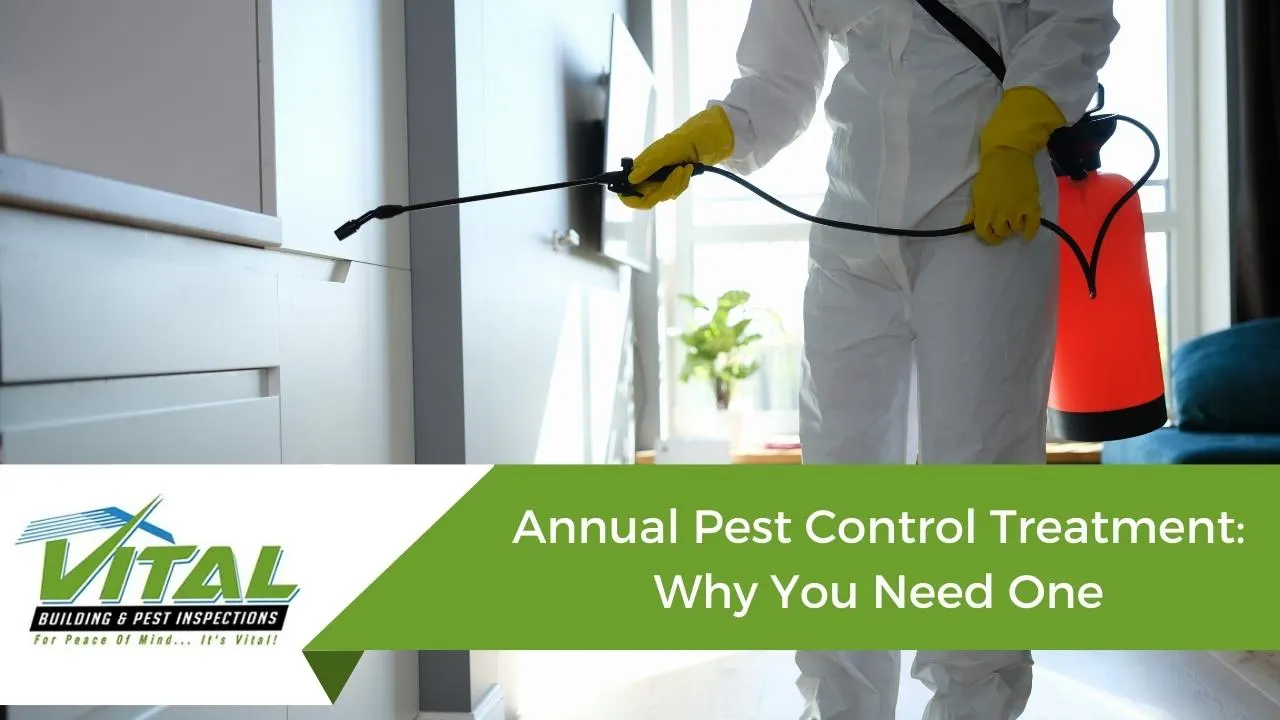
Annual pest control keeps your home protected all year, and it works best as 2 parts. The first is a yearly timber pest inspection, which the Australian Standard for termite management recommends at least once a year, to find termites, borers, timber decay and the conditions that attract them. The second is treatment by a licensed pest manager, for termites and for everyday pests such as cockroaches, ants and spiders. Together they find activity early, while it's small and simple to deal with.
If a pest control report for a home you're buying notes past termite activity, Peter's guide explains what each wording means.
Annual pest control at a glance
| Part | Who does it | What it covers | How often |
|---|---|---|---|
| Timber pest inspection | A timber pest inspector, such as Vital's | Termites, borers, timber decay and conducive conditions | At least once a year, as AS 3660.2 recommends |
| Termite treatment or management system | A licensed pest manager | Treating active termites and protecting the home | As needed, with the system checked at each inspection |
| General pest treatment | A licensed pest manager | Cockroaches, ants, spiders, rodents and other everyday pests | As your pest manager recommends for the pest and product |
What this covers
Why annual pest control matters
Pests are active all year in Sydney's climate, and many of them stay out of sight until there's a lot of them. Termites are the clearest example: they work inside timber, behind walls and under floors, so the first sign on the surface can come after significant damage. A yearly inspection finds activity early, which keeps the treatment and any repairs small.
A regular routine also helps with:
- A healthier home. Rodents and cockroaches can contaminate food and surfaces, so keeping them out supports a healthier household.
- Planning and budgeting. A yearly check is a known cost you can plan for, and it keeps larger repairs off the table.
- Rental properties. For landlords and property managers, a yearly inspection keeps each property in good condition and gives you a dated record.
- Peace of mind. You know the condition of your home, rather than wondering about that hollow-sounding skirting board.
What an annual timber pest inspection includes
A timber pest inspection to AS 4349.3 covers termites, borers and timber decay, along with the conditions that attract them. The inspection covers the inside of the home, the roof space, the subfloor and the garden, including fences, stumps, retaining walls and outbuildings, where they can be safely reached.
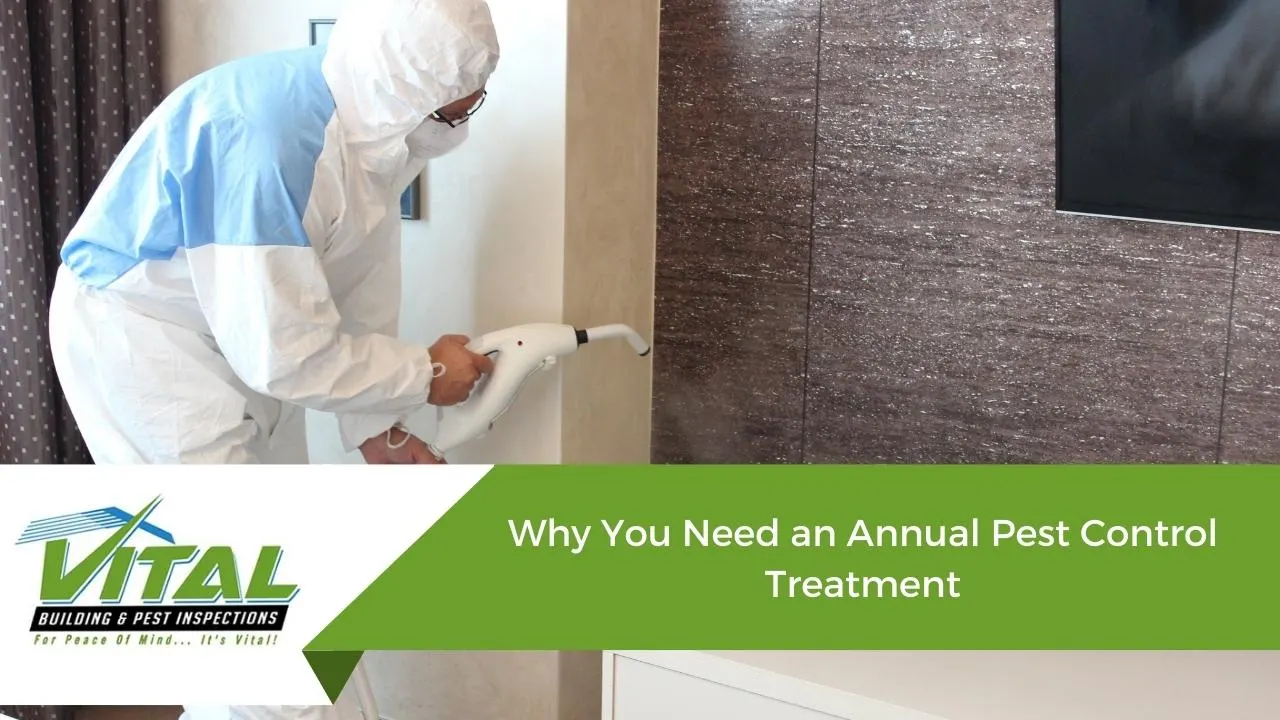
Where appropriate, your inspector may use a Termatrac T3i to check for termite movement behind walls, a thermal imaging camera to show temperature differences that can point to termite nests or damp, and a moisture meter to read the moisture in timber and walls. None of these cut into the home. If signs of other pests turn up, such as rodents or cockroaches, the report notes them so you can arrange pest control.
What a licensed pest manager does
Pest treatment in NSW is carried out by licensed pest management technicians. The NSW EPA's page on engaging a pest management technician explains that anyone carrying out prescribed pesticide work must hold a licence, and suggests:
- searching the EPA's public register to confirm the technician is licensed
- asking to see their photo licence card before work starts, checking the photo matches and the card is in date
- asking for the full product name, and for the safety data sheet, which the technician must provide on request
For termites, a pest manager can treat active termites and install or top up a termite management system, such as a chemical barrier or a baiting system. For everyday pests, they choose a treatment to suit the pest and your home. Peter's guide on whether pest control treatments are safe and pet friendly covers how to prepare your home.
What it means for your property
Conditions that attract pests
Annual inspection is about more than finding pests. It also finds the conditions that attract them, so you can change them. Your Vital report notes things such as:
- leaking taps, pipes, showers and downpipes that keep timber or soil damp
- a damp or poorly ventilated subfloor
- garden beds, mulch or soil built up against the walls, covering weep holes and the slab edge
- timber touching the ground, such as fence posts, stumps, landscaping timber and stored timber
- trees and stumps close to the house
Fixing these makes your home less inviting to termites and other pests, and it helps any termite management system do its job.
Habits that help between inspections
Between inspections, a few habits keep pests away:
- keep food sealed, benches clean and pet food stored securely
- repair leaks quickly, and run exhaust fans in bathrooms and laundries
- keep gutters clear and downpipes connected to the stormwater
- keep weep holes and subfloor vents clear of soil, mulch and garden beds
- store timber off the ground and away from the house
- seal gaps around pipes, doors and windows
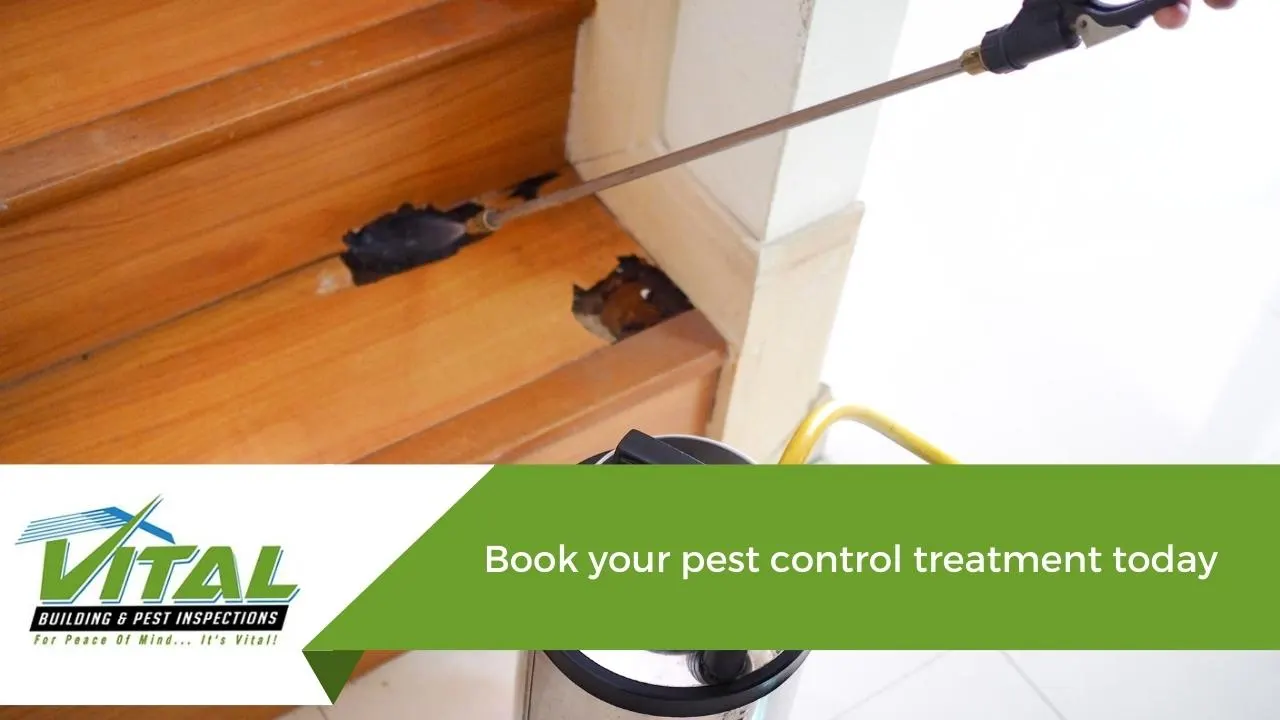
If you see mud tubes, damaged timber, discarded wings near windows, or droppings, book an inspection straight away rather than waiting for the yearly check.
When to book an inspection
Book a timber pest inspection at least once a year, as AS 3660.2 recommends. It's also worth booking:
- before you buy a home, as part of a combined building and pest inspection
- after a termite treatment, to check the result, and at each yearly review of your termite management system
- after renovations or landscaping that change the ground around the house
- straight away if you notice signs of termites or timber damage
Vital carries out every pest inspection in-house, and the report is fully independent, so it gives you a clear picture before you choose a pest manager. Vital confirms when your report will be ready at the time you book. Your inspector walks you through the findings and answers your questions about the report. You're welcome to attend.
Book a pest inspection, see the prices, or call Vital on 0401 012 074. Peter's blog has more guides on termites and pests.
Frequently asked questions
What is annual pest control?
Annual pest control is a yearly routine of inspection and treatment. A timber pest inspection checks for termites, borers and timber decay and the conditions that attract them, and a licensed pest manager treats any activity found, along with everyday pests such as cockroaches, ants and spiders. Doing it every year finds activity early, while it's simple to deal with.
How often should you get pest control?
The Australian Standard for termite management, AS 3660.2, recommends a timber pest inspection at least once a year. For everyday pests such as cockroaches, ants and spiders, how often you treat depends on the pest, the product and your home, so ask your licensed pest manager what suits your property and how long their treatment lasts.
Is a pest inspection the same as pest control?
They're 2 different jobs that work together. A pest inspection finds and reports termite activity, timber damage and the conditions that attract pests, so you know what's there. Pest control is the treatment a licensed pest manager carries out. Vital inspects and reports, and the report gives your pest manager the detail they need.
Do I need annual pest control if I have a termite barrier?
Yes. A termite management system works best with regular inspections, and AS 3660.2 recommends a timber pest inspection at least once a year. The inspection checks the system is intact, looks for any termite activity that has bridged or bypassed it, and picks up changes around the home, such as new garden beds against the walls.
How do I check a pest control technician is licensed in NSW?
The NSW EPA says anyone carrying out prescribed pesticide work must hold a licence. You can search the EPA's public register, and ask to see the technician's photo licence card before any work starts, checking the photo matches and the card is in date. You can also ask for the product name and its safety data sheet.