
Guides
The Benefits of Thermal Imaging in Pest Detection
Thermal imaging helps find termites by showing the warmth and moisture of their activity behind walls, ceilings and floors, without drilling or cutting. Your inspector then confirms each reading with a Termatrac and moisture meter.
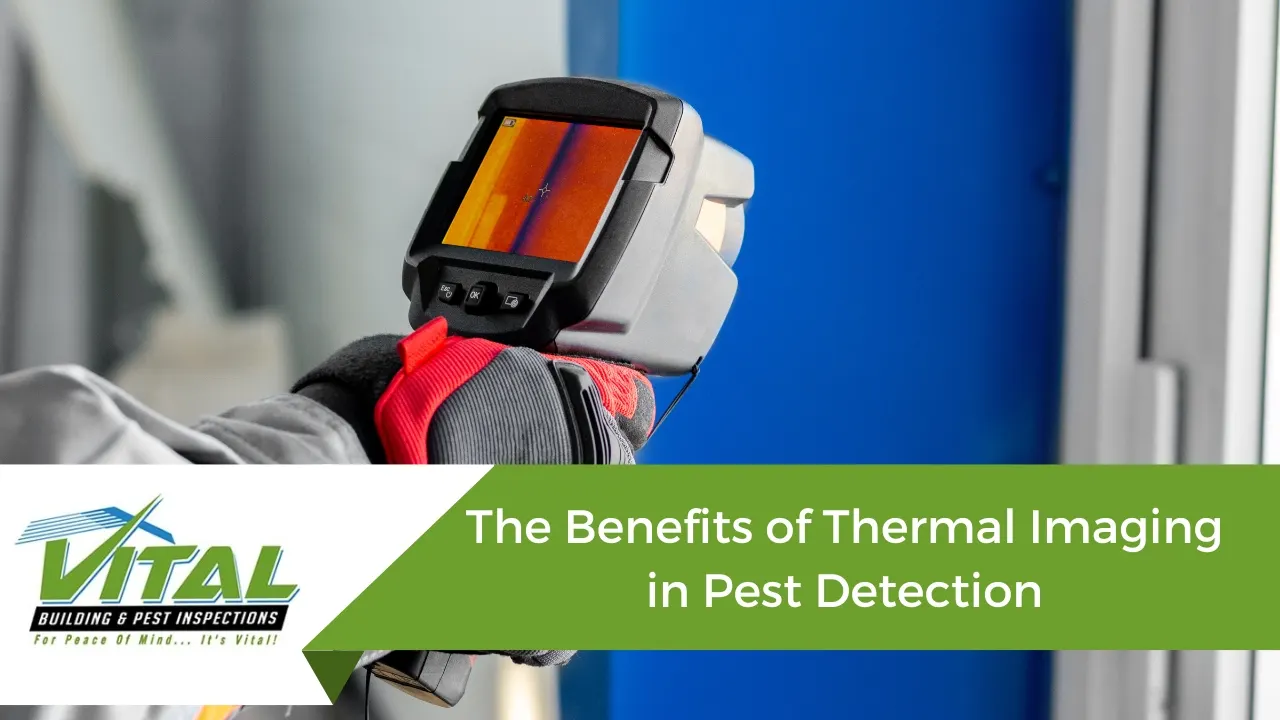
Thermal imaging can help an inspector look for signs of termites and other pests without opening up a single wall. Termite activity changes the temperature of the surfaces around it, through the warmth of a nest or the moisture in their workings, and a thermal camera shows those changes as colour. Vital's inspectors may use a thermal imaging camera on pest inspections, then confirm what it shows with other tools.
What is thermal imaging?
Every surface gives off infrared energy, and warmer surfaces give off more of it. A thermal camera picks up that energy and turns it into an image, with warmer and cooler areas in different colours. In a home, those temperature differences tell your inspector where to look more closely.
For thermal imaging termite detection, 2 patterns matter most. A termite nest inside a wall cavity can be warmer than the wall around it, and the mud and moisture termites carry into their workings can make a patch cooler. Neither is proof on its own, which is why your inspector treats a thermal image as a lead to follow up. The thermal imaging page explains how the camera is used across the whole inspection.
Early detection of pest activity
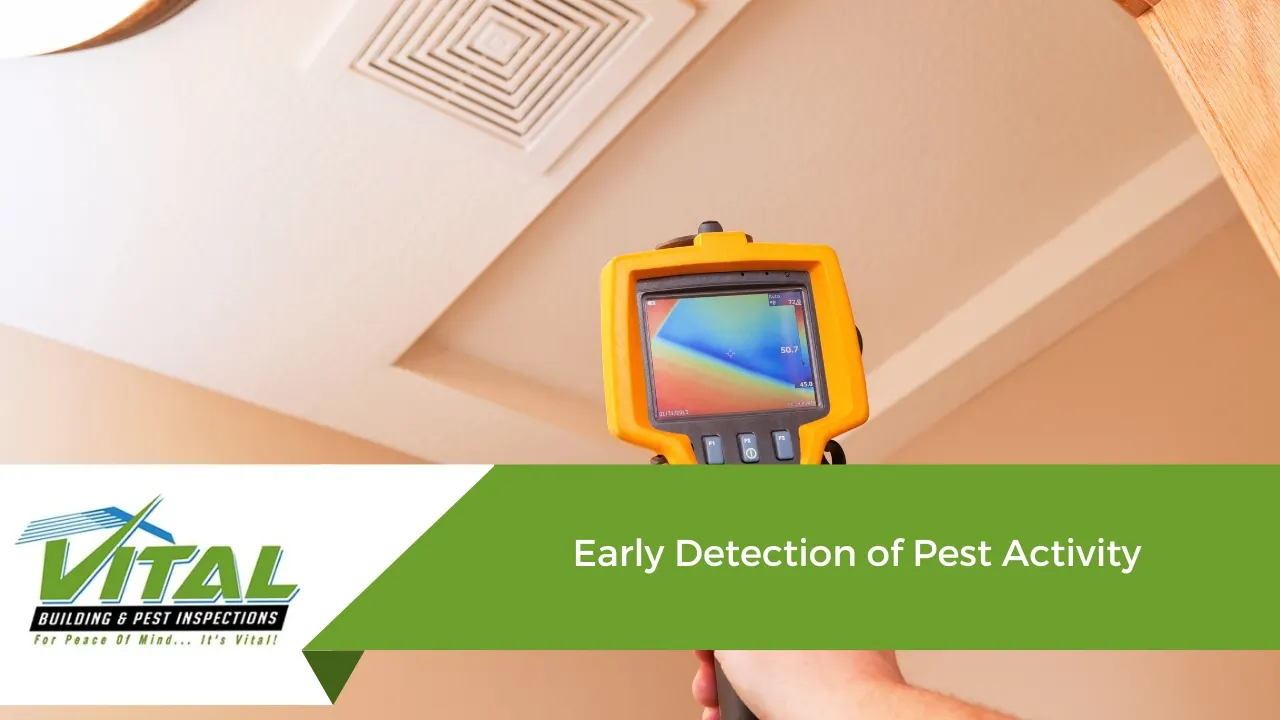
Termites work out of sight, inside wall frames, floor timbers and roof timbers. By the time you see damage, such as bubbling paint, a hollow-sounding skirting board or a sagging door frame, they've usually been there for a while. Thermal imaging lets your inspector look for the signs of activity earlier, when treatment is simpler and repairs are smaller.
The same goes for rodents. A nest in a ceiling space or wall gives off body heat, and a thermal camera can pick that up before droppings or chewed wiring appear.
Identifying hard-to-reach areas
Much of a home's timber sits where you can't see it: behind plasterboard, under floor coverings, inside built-in cupboards and around the bath and shower. Thermal imaging lets your inspector scan those surfaces from the room side, with closest attention to:
- wet area walls, where a slow leak can create the damp conditions termites look for
- external walls near garden beds, paths or patios built up against the house
- ceilings under roof valleys, box gutters and skylights
- floors over a subfloor with limited ventilation
Non-invasive and safe inspection
A thermal camera reads the surface from a distance, so the inspection leaves your walls, floors and finishes as they are. That matters when you're buying, because a pre-purchase inspection has to work without opening anything up. It also matters for termites, because disturbing active termite workings can send them elsewhere in the home before a pest manager can treat them.
When the camera shows something unusual, your inspector may check it with a Termatrac T3i, which can pick up termite movement through wall linings, and a moisture meter. Read more on the Termatrac and moisture meter pages.
Reducing long-term damage and costs
Finding termites early keeps repairs smaller. Termites eat the timber inside a frame or floor, so early treatment protects more of the structure, and the repair is often a section of timber instead of a whole wall. Rodents chew wiring and insulation, and finding a nest early lets you deal with it before that wear builds up.
Thermal imaging also helps you deal with the conditions that attract pests. A damp wall, a leaking pipe or a poorly ventilated subfloor appears clearly on the camera, and fixing it makes the home less inviting to termites.
Accurate and reliable results
A thermal camera is a powerful tool, and its accuracy comes from how the reading is followed up. Vital inspects to AS 4349.3, the Australian Standard for timber pest inspections, and the camera adds to that visual inspection. Your inspector checks every unusual reading with a second tool, then records each finding, where it is and the recommended next step, with photos in your report.
Vital's owner, Peter Ezeigwe, holds ITI and Restoration Sciences Academy training in microbial remediation, mould, water and flood damage, and fire and smoke damage, so Vital reads moisture the way a restorer does, which helps tell a termite lead from a plumbing leak or condensation.
Stay one step ahead of pests
Thermal imaging gives you a closer look at the parts of a home you can't see, and early knowledge of what's behind them. If you're buying, a termite inspection or combined building and pest inspection tells you about termite activity and damage before you commit. If you own your home, a regular pest inspection keeps you a step ahead.
Every inspection is carried out in-house by Vital's own experienced inspectors, with no subcontractors. You're encouraged to attend the inspection, meet your inspector and ask questions on site. Your inspector walks you through the findings and answers your questions about the report. There are more pest and building guides on the guides page.
Frequently asked questions
Can thermal imaging detect termites?
It can point to them. A thermal camera reads surface temperature, and termite activity changes it: a nest gives off warmth, and termite workings hold moisture that shows as a cooler patch. Your inspector treats each reading as a lead, then may check it with a Termatrac or moisture meter before anything goes in your report.
Does a thermal imaging inspection damage walls or floors?
No. The camera reads the surface from a distance, so nothing is drilled, cut, lifted or probed to take an image. That suits occupied homes and homes you're buying, where you have no right to open up walls. Your inspector taps or sounds timber only where a finding needs confirming.
What else does thermal imaging show in a pest inspection?
Besides termite activity, it can show warmth from rodents or a nest in a ceiling, and the damp areas that attract termites in the first place, such as a leaking shower wall or a wet subfloor. Those damp areas go in your report too, because drying them out makes the home less inviting to timber pests.
When does thermal imaging termite detection work best?
It works best when there's a temperature difference to read, such as between a damp patch and the dry wall around it, or between a warm nest and a cool wall cavity. Your inspector reads each image with the conditions on the day in mind and checks anything unusual with a second tool.
Is thermal imaging part of a standard pest inspection?
Where appropriate, Vital's inspectors may use a thermal camera on building and pest inspections to help assess signs seen during the inspection. The inspection itself follows the Australian Standard for timber pest inspections, so the camera adds to the visual inspection rather than replacing it. The pest inspection page explains what's covered.